 Phone: (021) 073-9955
 Location: New Zealand



The Fence Company Website Checklist: 9 Things Losing You Quotes Right Now
Your fence company website can attract visitors and still quietly lose most of its quote opportunities. If homeowners cannot confirm what you build, where you work, whether you are trustworthy, or how to request an estimate, they will go back to Google and try the next contractor.
Book A CallKey Takeaways
- The nine checks cover message clarity, quote buttons, form fields, mobile speed, real project photos, gallery structure, trust signals, service and location pages, and what happens after someone submits.
- Score your site by opening the homepage on a phone as a first-time visitor and giving one point for each check it passes.
- 8 to 9 points means the core path works, so focus on tracking and small tests. 5 to 7 points means fixable leaks. 0 to 4 points usually means a structural rebuild.
- The most common structural fault is one page trying to cover every fence type and town, which weakens both conversion and search visibility.
- Repair the site when the structure, speed, and editing are sound. Rebuild when most pages are slow, everything sits on one page, or the form is unreliable.
- A quote form should ask only for fields that change how you qualify, value, route, or follow up on the lead.
What Should a Fence Company Website Include?
A fence company website should clearly explain which fences the company installs, where it works, and why homeowners should trust it. It also needs real project photos, dedicated service pages, customer reviews, fast mobile pages, and a simple way to request a quote and understand what happens next.
Having those elements somewhere on the website is not enough. A customer needs to find the right information without digging through a crowded homepage or opening six menu items.
We build every fence website to answer three questions:
- Who are we?
- What do we do?
- Where do we serve?
Answer those questions clearly and you have earned the next scroll. Leave one unanswered and you give the visitor a reason to return to the search results.
How to Use This Fence Company Website Checklist
Open your homepage on a phone and pretend you have never heard of your own business. You are a homeowner with a leaning boundary fence, a new dog, or neighbours who can see straight into the backyard. You want to know whether this company installs the fence you need, works in your area, and looks capable of finishing the job properly.
Start at the top of the homepage. Try to find the right fence service, view comparable projects, confirm the company service area, and submit an estimate request. Time how long that takes. Give your website one point for each of the nine checks it passes.
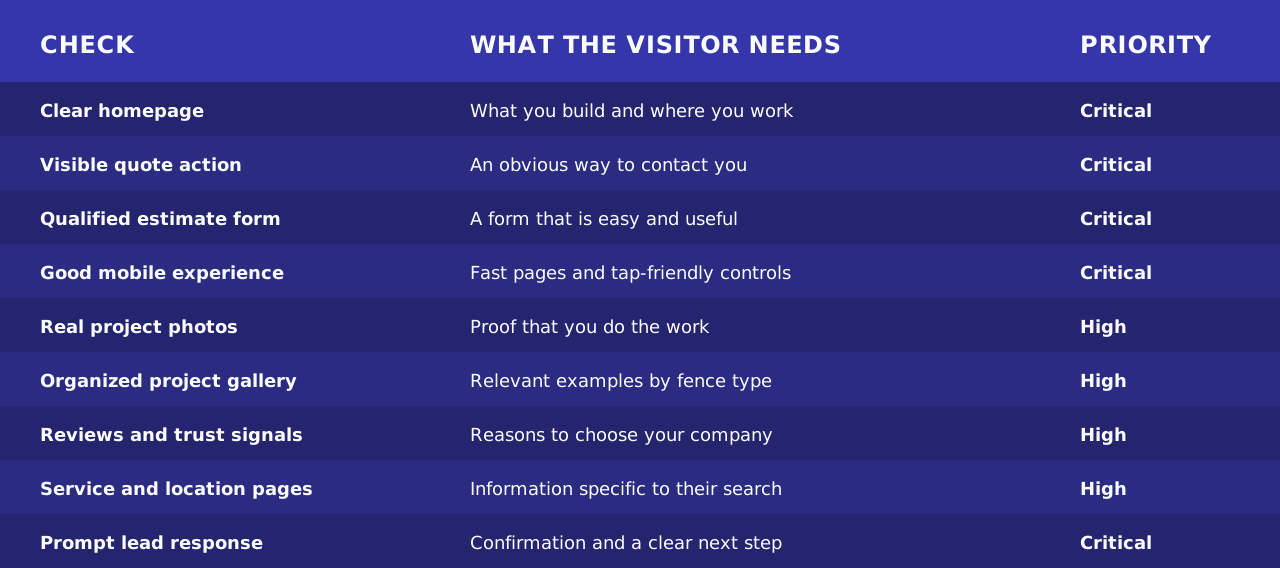
- Critical: The problem can stop an enquiry completely.
- High: The problem weakens trust, relevance, or visibility.
- Medium: The problem affects usability or lead quality but may not prevent contact by itself.
Do not grade the website based on whether you like the colours. Grade it on whether a new customer can make a confident decision.
Your Homepage Does Not Say What You Build or Where You Work
Quality you can trust. Building better boundaries. Your local outdoor experts. These headlines sound pleasant, but they make the homeowner do the work. What type of work does the company perform? Which areas does it serve? Does it install new fences, repair old ones, or do something else entirely?
A useful homepage headline states the main service and the primary area. Residential Fence Installation in Bend and Central Oregon tells the visitor much more than a slogan. The supporting text can then name the main fence types or the problem the company solves. It does not need to list every material, suburb, warranty, and company value in the first screen.
Many fence websites take all their business information and squeeze it into one homepage. Wood fencing competes with vinyl. Fence repair competes with new installation. Six locations get listed in the same paragraph. The owner feels as if the page covers everything, but the homeowner has to sort through a pile of details to find the one service that matters.
Google faces a similar problem. A single page trying to rank for six services across six cities rarely becomes the strongest result for any one combination. Give the homepage a clear purpose. Introduce the company, establish what it does, name the main service area, and direct people to the appropriate service or location page.
The Nielsen Norman Group found that visitors often leave a web page within the first 10 to 20 seconds unless it quickly makes its purpose clear. The top of a fence company homepage has that long to show the service, the area, and a reason to keep reading.
60-Second Test: Homepage Clarity
Show the top of the homepage to someone unfamiliar with the company. Can they tell you what the business does and where it works without scrolling?
Your Quote Button Is Too Difficult to Find
A homeowner has looked at three fence companies. They like your recent projects. They are ready to ask for an estimate. Now they have to find the Contact page. The phone number is small. The navigation is crowded. The only quote button appeared near the top of a page they have been scrolling through for two minutes.
That pause matters because the customer is not committed to your company yet. Place a clear quote action near the top of every important page. Repeat it after sections where a customer is likely to make a decision, such as reviews, project galleries, service details, and warranty information.
On mobile, the phone number should be tappable. Buttons need enough size and spacing for someone using one thumb. The wording should describe the action. Request a Fence Quote is clearer than Submit. Call for an Estimate is clearer than Get Started.
60-Second Test: Reaching the Quote
Starting from any service page, can someone call or reach the quote form with one obvious tap?
Your Estimate Form Creates the Wrong Kind of Friction
The usual advice says shorter forms always convert better. We do not treat that as a universal rule. A form with only a name and phone number may attract more submissions, but the contractor learns almost nothing before returning the call. Is it a small repair or a full commercial installation? Does the company install the requested material? Is the lead inside the service area?
Our standard fence quote form asks for:
- First name and last name
- Email and phone
- Fence type
- Project budget
- A message
The fence-type dropdown includes the materials and services the company offers, plus an Other option. This gives the contractor a useful starting point before the first call. We can also use the selected fence type to attach an average opportunity value when a lead enters the Growth System.
The project budget adds a low, medium, or high priority tag based on ranges agreed upon with the contractor. When several enquiries arrive, the owner can see which opportunities may deserve attention first.
The message field catches the details a dropdown never will. The homeowner may need an old fence removed. There could be storm damage, access restrictions, a shared boundary, or a neighbour who needs to be included in the conversation.
Every field needs to earn its place. Useful qualification prepares the contractor and filters out some casual price shoppers. Pointless friction asks questions nobody uses, makes people repeat information, or demands exact measurements that a homeowner may not know.
60-Second Test: Form Fields
Look at every required field and ask whether the answer changes how you qualify, value, route, or respond to the lead. If it does not, remove it.
Your Website Is Slow or Frustrating on Mobile
Project photos make fence websites heavy. The homepage might load quickly on the office desktop, where it has been opened dozens of times and the internet connection is strong. That does not reflect the customer experience. They may be standing in the backyard using mobile data while comparing contractors.
Google's research on mobile speed found that 53 percent of mobile visits are abandoned when a page takes longer than three seconds to load. A photo-heavy fence homepage on a phone connection is exactly the kind of page that crosses that line.
They tap your result. The hero photo starts loading. The page shifts. A pop-up covers the quote button. They try to close it, hit the wrong link, and leave.
Test how quickly the first useful content appears, whether photos delay the page, whether buttons are easy to tap, whether phone numbers open the dialler, and whether the form works with mobile keyboards. Pay close attention to galleries. Full-resolution job-site photos uploaded directly from a modern phone can be far larger than the website needs.
60-Second Test: Mobile Load
Turn off Wi-Fi, load the homepage on your phone, find a service, view three projects, and submit a test enquiry.
You Are Using Generic Photos Instead of Your Own Fence Projects
Fencing is visual. Homeowners want to see that you have built the kind of fence they are considering. A polished stock photo cannot prove that.
A perfect photo of a fence from another country can create questions. The materials may look unfamiliar. The landscaping does not resemble the local area. There is no company truck, crew member, or project detail connecting the work to your business.
Real photos do not need to look like an architecture magazine. Capture a wide view of the finished fence line, the gate and hardware, corners, slopes, difficult transitions, and before-and-after angles. These photos help a homeowner picture the same material on their property. A slightly imperfect photo of a fence your crew installed carries more weight than a flawless stock image.
60-Second Test: Photo Proof
Could a stranger verify that your company installed the fences shown on the website?
Your Project Gallery Makes People Hunt for the Right Fence
A gallery with 80 mixed photos sounds impressive until someone wants to see vinyl privacy fencing and has to scroll past chain link, pool fencing, timber gates, commercial security work, and five images of the company truck.
Organize projects around the way homeowners shop. Use categories for wood, vinyl, aluminium or ornamental, chain link, privacy, pool, farm, commercial fencing, and gates where they apply. Each category should connect to its relevant service page.
Captions can add useful context such as location, material, height, style, project challenge, or gate configuration. Recent project tells the customer very little. Six-foot cedar privacy fence installed on a sloped lot in Redmond helps them judge whether you have handled work like theirs.
60-Second Test: Gallery Navigation
Pick one fence type. Can you find three relevant projects without scrolling through unrelated work?
Your Reviews and Trust Signals Appear Too Late
Fence installation can involve a large deposit, several weeks of planning, property boundaries, pets, neighbours, and a crew working around someone's home. The customer is assessing risk before requesting a quote. The BrightLocal Local Consumer Review Survey reports that 97 percent of consumers read reviews for local businesses, and that reading usually happens before they make contact.
A Testimonials page hidden in the navigation asks the homeowner to go looking for reassurance. Bring that reassurance closer to the decision. Use recent reviews, years in business, completed project numbers, licensing or insurance details, warranties, crew photographs, trade credentials, and before-and-after work where relevant. Our guide to why Google reviews matter for fence companies covers how to collect and display them.
Specificity matters. Great service and a great team could describe any business. A review explaining that the crew handled a difficult slope, kept the dog secure during the work, and left the property tidy answers real concerns.
60-Second Test: Trust Signals
Before reaching the form, can a visitor find clear evidence that your company has completed similar projects and can be trusted on the property?
You Have One Generic Page for Every Service and Location
A single Services page listing wood, vinyl, aluminium, chain link, gates, repair work, and commercial fencing does not give any one service enough room. Someone searching for vinyl fence installation has different questions from someone replacing storm-damaged chain link.
Give each important fence type its own page. Do the same for the core cities and towns you serve, but include genuinely local information. Mention relevant project types, neighbourhoods, terrain, regulations, weather concerns, or completed work. Swapping one city name for another across otherwise identical pages does not help the homeowner.
This is where website conversion and search visibility meet. A dedicated page helps Google understand the subject, then gives the homeowner an experience closely matched to the original search.
Our guide to fence company SEO explains how service and location pages help contractors become visible for the work and towns they serve, and a complete Google Business Profile does the same job for map and local-pack visibility.
What Happened for Broken Top Builders & Design
Before the rebuild, most of the company information had been compressed into three homepage sections. We rebuilt the homepage with a logical flow: services below the hero, a short company story, reviews, supporting services, a featured service, recent work, local credibility statistics, and then the form.
The main fencing services linked to dedicated service pages. We also built pages for six primary locations. Within the first week, eight leads came through the system, along with missed calls that could be followed up. Over the following few months, each location page recorded roughly 12 to 36 search clicks.
Those are not enormous traffic numbers, but a local contractor does not need thousands of visitors to make a page worthwhile. Two or three suitable projects may represent meaningful work for the month. The submissions also showed stronger intent. Homeowners often arrived with a good idea of what they wanted and were looking for the right company to do it.
That is one partner result, not a promise that every rebuild will generate eight leads in seven days. The useful lesson is the mechanism: clear service information, locally relevant pages, proof, and a direct route to enquire.
60-Second Test: Service and Location Pages
Does every priority service and core location have a useful page of its own, or is the homepage trying to rank for everything?
Nothing Happens Quickly After Someone Requests a Quote
The form worked. The lead arrived. Now what?
If the customer sees a vague thank-you message and hears nothing for the rest of the day, they may have submitted the same project to two other fencing companies. A good submission process should confirm that the enquiry was received, explain when the company expects to respond, and state whether the next step is a phone call or site visit.
Behind the scenes, the lead needs to reach the right person. Missed calls need a response process too. An enquiry sitting unread in a shared inbox is not an opportunity the company can work.
This is one reason we collect enough information to make the first follow-up useful. The contractor can see the customer name, fence type, budget priority, and project notes before picking up the phone.
See why the first fence contractor to respond often wins the job and how to build a response-time process your team can maintain.
60-Second Test: Follow-Up Speed
Submit a real test enquiry. Confirm where it appears, who receives it, what the homeowner sees, and how quickly the follow-up process begins.
Your Fence Company Website Audit Score
8 to 9 Points: Strong Foundation
The main journey works. Focus on measuring calls and form submissions, improving individual pages, and testing small changes.
5 to 7 Points: Correctable Leaks
The site has useful parts, but several problems are likely suppressing quote volume. Fix the critical items first, then improve proof and page structure.
0 to 4 Points: Structural Problems
A few new buttons or rewritten headings probably will not be enough. The site may need a new structure, a better mobile build, dedicated pages, and a form connected to a reliable follow-up process.
Should You Fix the Website or Redesign It?
Repair the existing website when the basic structure works, pages load properly, mobile visitors can use it, and updates are straightforward. If the main problems are weak headings, buried buttons, missing reviews, or a poor form, targeted changes may be enough.
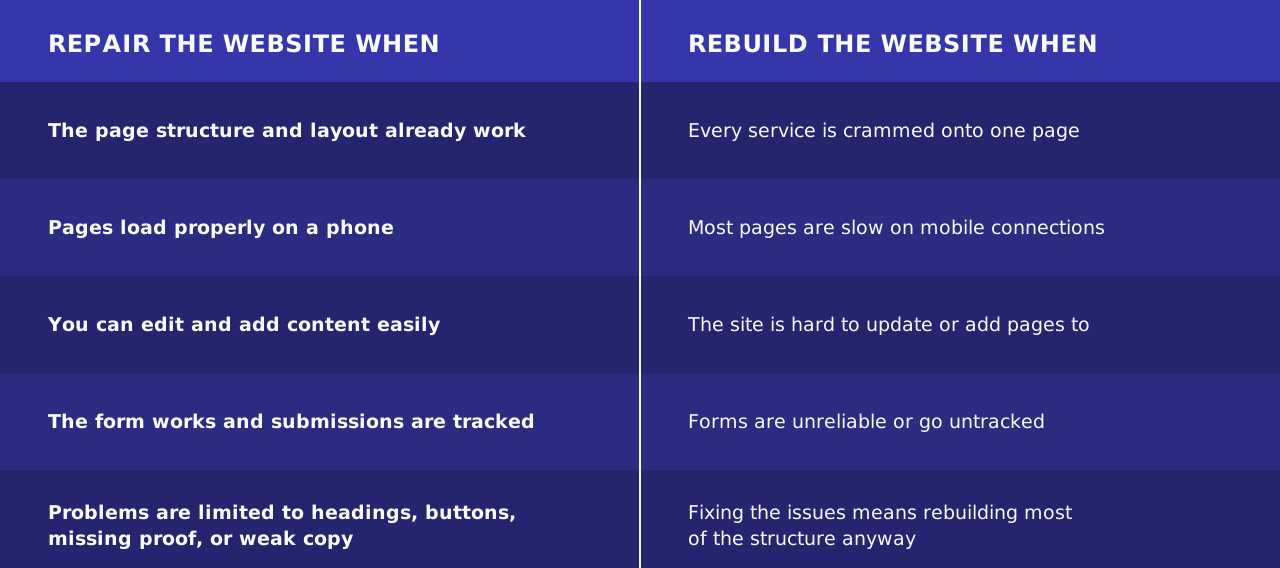
A redesign makes more sense when most pages are slow, the mobile experience is poor, every service is compressed into one page, the site is difficult to edit, forms are unreliable, or repairs would require rebuilding most of the structure anyway.
Be honest about the condition of the site. Keeping an old build because it already exists can cost more than replacing it when every improvement requires another workaround.
Web Design for Fence Companies That Need More Than a Cosmetic Refresh
A new design should solve business problems, not merely change the colours and photographs. The homepage should introduce the business and direct traffic. Service pages explain individual fence types. Location pages address the areas the company wants to win. Project photos establish credibility. The form collects information the sales team can use.
Pax Pro web design for fence companies combines custom-coded pages, clear service and location structures, lead-generation forms, and follow-up systems designed around fencing enquiries.
That includes the less visible work that determines whether a website performs: opportunity values, priority tags, submission tracking, missed-call handling, and a clear route from the first visit to the first conversation. If your audit reveals problems across the whole site, we can help determine whether focused repairs are realistic or rebuilding would be the better use of your budget.
Fix the Path From Visit to Quote
Your website does not need to answer every possible fencing question on the homepage. It needs to give the right homeowner a clear path: understand the company, find the right service, see proof, request a quote, and know what happens next. Fix the critical breaks in that path first, then measure whether more qualified calls and submissions follow.
Book A CallWant to Know More?
Book A Call
Frequently Asked Questions
-
A fence company website should include clear service and location information, individual pages for important fence types, real project photos, reviews, trust signals, and an easy way to request a quote. It should work well on mobile and explain what happens after an enquiry is submitted.
-
The website may have too little qualified traffic, weak service and location relevance, insufficient proof, or too much friction around contacting the company. Check whether visitors can quickly understand what you do, where you work, why they should trust you, and how they can request an estimate.
-
Ask for the customer name, contact details, fence type, project location or postcode, budget range, and relevant project notes. Optional photo uploads can also help. Keep fields that improve qualification or follow-up, and remove questions your team will not use.
-
Yes. Real project photos prove that the company has completed similar work and help homeowners picture a fence on their own property. Capture wide finished views, gates, hardware, slopes, corners, and before-and-after angles rather than relying on generic stock photos.
-
Consider a redesign when poor speed, mobile usability, page structure, forms, tracking, and difficult updates affect most of the site. If the underlying build works and the problems are limited to content or calls to action, focused repairs may be enough.