 Phone: (021) 073-9955
 Location: New Zealand



Fence Estimate Follow-Up: What to Send When a Customer Goes Quiet
Curtis founded Pax Pro, a marketing agency that works only with fence contractors. He builds the lead-response and follow-up systems that turn quote requests into signed jobs, and he writes about the sales side of running a profitable fence calendar.
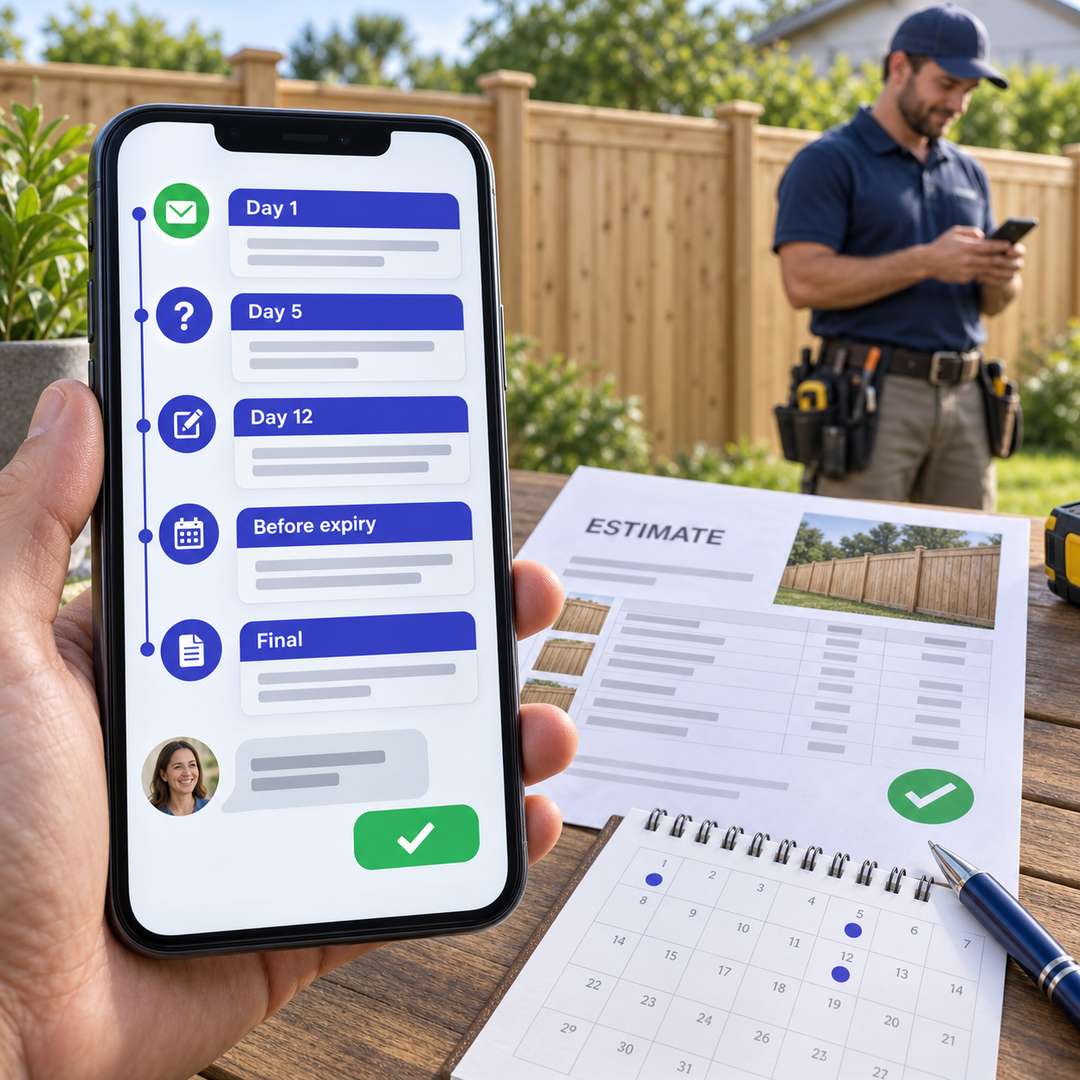
When a fence estimate goes quiet, it's an open question, not a lost job. Send a short, predictable set of follow-ups, then stop. Confirm the quote landed in the first day or two. Ask one focused question around day five. Offer a genuine option around day ten to fourteen. Ask for a decision before the price expires, then send one last close-the-loop message. The point is a clear answer on every quote you send: yes, revise, postpone, no, or closed. Here's the sequence I use with fence clients, the scripts that go with it, and the rules that keep it legal.
Estimate follow-up is one stage of a larger sales process. For how it connects to speed to lead, quote structure, objections and the review loop, see our fence lead-response system.
Key Takeaways
- A quote with no reply is a status, not a no. Every estimate should end in a known outcome: approved, revised, postponed, declined, or expired.
- Fix the quote first. If it doesn't spell out fence type, footage, gates, removal, finish, exclusions, who pulls permits, timing, and a price-good-until date, the customer can't really say yes.
- Run a short cadence you can test: about one to two days, about day five, about day ten to fourteen, a decision request before expiry, and one final message. It's a starting point, not a proven formula.
- Keep it legal. Follow-up email has to meet CAN-SPAM. Automated texts and calls bring in TCPA and state rules. Honor STOP and every opt-out.
- Track three separate numbers: response rate, quote recovery rate, and responder close rate. Don't report one as another.
A quiet fence quote is not a lost job
A quote you sent isn't a finished job. It's in one of a few states: sent, opened, question pending, revision requested, postponed, approved, declined, or expired. "No response" isn't on that list. It's a gap, and a gap needs a next step with a date on it.
Homeowners shop estimates before they pick anyone. The Federal Trade Commission tells consumers to get multiple written estimates and to expect each one to spell out the work, materials, finish date, and price. So a few quiet days after you send a quote is normal shopping. It isn't a rejection. Your job in that window is to move every quote into a state you can act on.
Being easy to reach is its own selling point. In a 2026 Jobber-commissioned survey of 800 recent U.S. homebuyers, 42% said the thing they wanted most before hiring was clear upfront pricing or a written estimate. 15% said they had to chase a contractor for a reply, and 9% never got one. That study covers recent homebuyers across home services, not fence customers specifically. The pattern still holds: the contractor who keeps the thread moving looks like the safer pick.
Fix the fence quote before you chase the customer
Before you send one follow-up, make sure the quote gives the customer enough to decide. It should state fence type, height, rough footage, gate count and hardware, removal and disposal, finish, key assumptions and exclusions, who handles permits and boundary lines, timing, the payment schedule, and the date the price is good until.
A vague quote gets vague silence. If yours leaves any of that out, your follow-up isn't chasing a decision. It's doing work the estimate should have done. Our guide to how to estimate a fence job covers the scope and pricing detail that belongs on the page. Quick reminder: an estimate is a projection that can move, a quote is usually a fixed price for a set scope and window. Tell the customer which one they got.
Set the follow-up expectation when you send the quote
The follow-up that gets answered is the one the customer already expects. When you send the estimate, tell them when you'll check back and ask how they want to hear from you. Confirm it arrived and that there's an obvious way to approve it or ask for changes.
Send-day script: Hi [Name], your fence estimate is in your inbox. It covers [fence type], about [footage] feet, [number] gate, and removal of the old fence. The price holds until [date]. Do you want questions by text or email? If I haven't heard back by [day], I'll check in once to see if you want to move ahead, change the scope, or hold off.
This isn't speed to lead. The research on answering first, like the 2011 Harvard Business Review audit of 2,241 companies, is about brand-new inquiries and whether anyone gets a real conversation at all. It doesn't look at quotes that already went cold. For that first-contact window, see speed to lead for fence contractors. Once the estimate is out, a slower rhythm takes over.
What follow-up schedule should you use after sending a fence estimate?
Run a five-touch sequence over about two weeks. Confirm delivery in the first day or two. Ask one diagnostic question around day five. Offer a real option around day ten to fourteen. Ask for a decision before the price expires. Then send one last close-the-loop message. Treat it as a starting workflow to test against your own reply and close numbers, not a proven best.
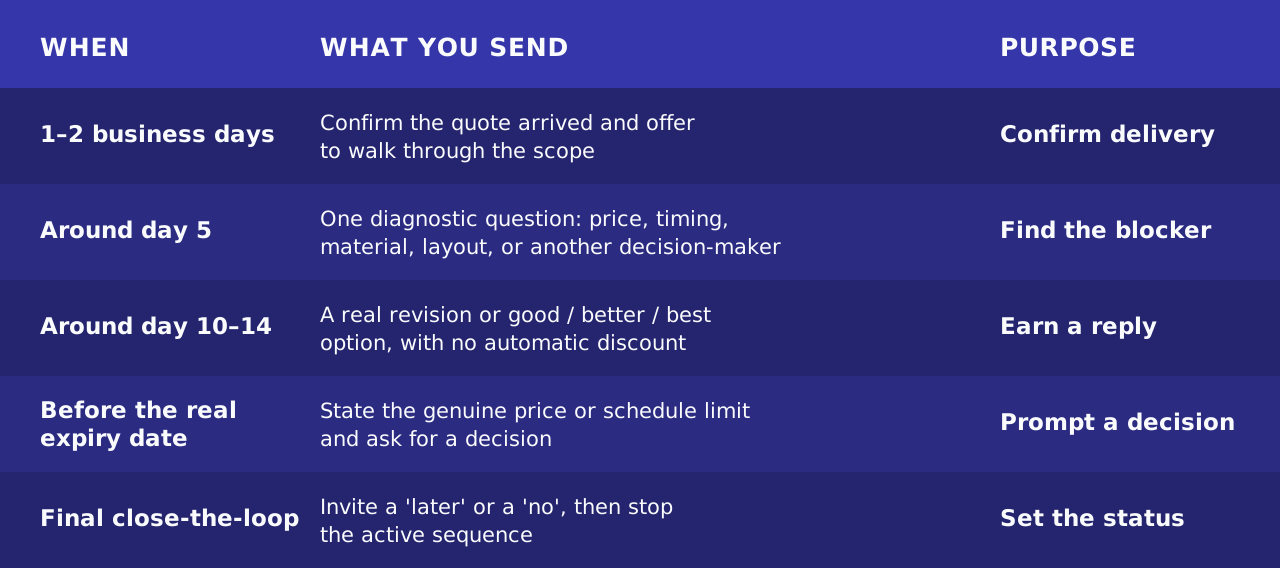
The same sequence in text:
- 1 to 2 business days: confirm the quote arrived and offer to walk through the scope.
- Around day 5: ask one question about what's holding it up: price, timing, material, layout, or another decision-maker.
- Around day 10 to 14: offer a real revision or a good, better, best option without dropping the price by reflex.
- Before the real expiry date: state the genuine price or schedule limit and ask for a decision.
- Final close-the-loop message: invite a "later" or a "no," then stop the active sequence.
Only send a later seasonal reminder if the customer asked for one or you've got a legal reason to contact them again. A sequence that never ends is how helpful follow-up turns into the pushy sales routine homeowners say drives them off.
Download NowWhat do you text a customer who won't respond to a fence quote?
Send one short message. Name the fence, say when you sent the estimate, give a clear choice, and make it easy to say no. Skip the guilt, the fake shortage, the false "last chance," and any claim that the price is about to jump when it isn't.
Text script: Hi [Name], just checking the [wood/vinyl/aluminum] fence estimate I sent on [date] came through okay. If the project's still on, I can do one of three things: walk through the scope, revise an option, or confirm the current install window. If you've gone another way, no problem, just tell me and I'll close the file.
That works because it's specific, it's short, and it makes "no" as easy to send as "yes." FTC advertising guidance says claims have to be truthful and backed up, so keep anything you say about price, availability, or deadlines accurate.
How do you follow up on a fence quote by email?
Use email for the bigger touches, like a revised option or a good, better, best comparison. Keep it CAN-SPAM clean: a real sender name, an honest subject line, your mailing address, and a working unsubscribe.
Email script. Subject: Your [City] fence estimate, options and timing. Body: Hi [Name], here's the fence estimate again for easy reference, plus two options if budget or timing is the sticking point. Option A is the original scope. Option B swaps the [material/gate] to bring the price down without dropping the warranty. The current price holds until [date] because [real reason]. Reply with the option you want, or tell me it's a no and I'll close it out.
Diagnose the reason before you discount
A silent quote has a reason behind it, and the reason decides your move. Work the branch, not the price:
- Price: change the scope or offer material and gate options. Don't quietly cut your margin to save the job.
- Timing: give a real install window, or agree on a month to circle back and put it on the calendar.
- Hard to compare: line up footage, gates, removal, material grade, post depth, warranty, and permit assumptions so your quote and the other one describe the same job.
- Property or HOA holdup: find the survey, boundary, neighbor, HOA, utility-marking, or permit decision that's actually stuck.
- Trust: send photos of finished jobs like theirs, your license and insurance details where they apply, and a real review or warranty, not sales copy.
Price is rarely the only factor. In Modernize's 2024 survey of nearly 3,000 homeowners, expertise, warranties, communication, reputation, and availability all shaped who got hired, and pushy sales tactics were the single most common thing that turned homeowners off.
Do not revive an expired fence price as if it is current
If supplier costs, site conditions, scope, or your schedule changed since the estimate went out, re-price the job and send a clearly dated revision. Don't just honor the old number. Written-contract rules and cancellation windows vary by state, so don't imply that clicking "accept" forms a full contract everywhere. A dated revision protects your margin and keeps the paperwork straight.
How do you follow up on an old fence estimate without breaking the rules?
Match the channel to the rules. Follow-up email has to meet the federal CAN-SPAM Act. Automated marketing texts and calls bring in the Telephone Consumer Protection Act and state laws, and those turn on consent, the tech you use, your past relationship, and where the customer lives. Honor every opt-out. Treat this as an operating guardrail, not legal advice.
- Email: the FTC's CAN-SPAM compliance guide calls for accurate sender and subject info, a physical mailing address, a clear opt-out, and opt-out processing within 10 business days. You're still on the hook even when a vendor sends for you.
- Texts and calls: the FCC's 2024 consent-revocation order confirms a customer can pull consent through any reasonable method, and you have to stop quickly. Suppress the number when someone replies STOP.
- Ignore outdated advice about the FCC's one-to-one lead-generation consent rule. The Eleventh Circuit vacated that rule in January 2025, so it isn't in force. Have a lawyer review any automated campaign and your state's rules.
How do you track fence quote follow-up?
Record the pool of dormant quotes you contacted, how many messages got delivered, how many people replied, how many opportunities reopened, how many signed, the revenue and gross profit that came out of it, and any opt-outs or complaints. Then work out three separate rates and never swap one for another.
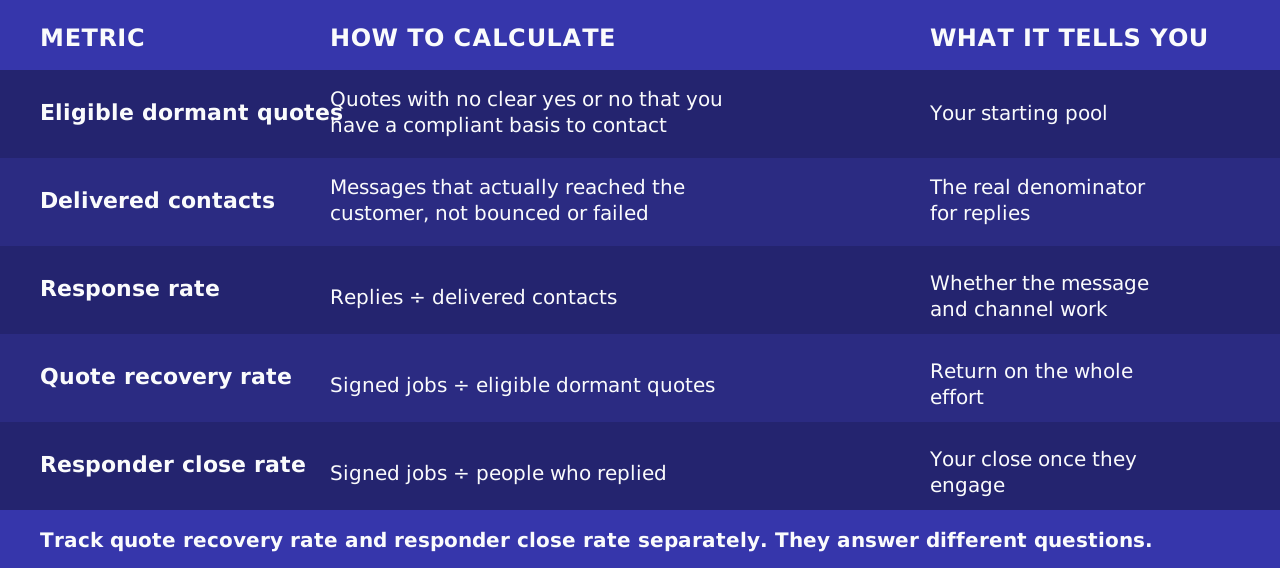
The three rates in text:
- Response rate: replies divided by delivered messages. Tells you if the message and channel are landing.
- Quote recovery rate: signed jobs divided by eligible dormant quotes. Tells you the real return on the whole push.
- Responder close rate: signed jobs divided by the people who replied. Tells you how well you close once someone's talking.
A high responder close rate isn't a recovery rate. They answer different questions, and calling one the other oversells what the follow-up did.
When should you stop following up on a fence estimate?
Stop the active sequence when the customer says no, opts out, tells you they hired someone else, or gets the final close-the-loop message with no reply. Write down the reason if they give one, and don't argue with it. You can revisit a closed file later, but only when you've got a legal reason to reach out again.
One Pax Pro campaign, one client's numbers
In one Pax Pro client campaign, 39 dormant contacts replied and 20 of those people signed jobs. At the client's reported $5,500 average job value, that's roughly $110,000 in booked revenue. It's one client's result, not an industry benchmark. And the 51% is the share of people who replied and then signed, not a recovery rate against every quote on the list.
Want a system like this built into your CRM, the cadence, the scripts, and the tracking? Book a growth call and we'll map it to how your shop already runs.
Put the fence follow-up system to work
Fix the quote so it can be answered. Tell the customer when you'll check back. Then run a short, bounded sequence that ends in a clear answer. Keep the channel compliant, find the reason before you discount, and track recovery and responder close rates on their own. Do it this way and follow-up stops feeling like nagging. It becomes the cheapest pipeline you own.
This is the post-estimate stage of our full fence lead-response system, which maps every step from a new inquiry to a signed job.
You'll find more of the sales-side playbook in the Pax Pro fence contractor blog, including how to estimate a fence job and speed to lead for fence contractors.
Download NowWant to Know More?
Book A Call
Frequently Asked Questions
-
Send the first follow-up within one to two business days, just to confirm the quote arrived. Then space the next touches around day five and day ten to fourteen, with a decision request before the price expires. Treat that timing as a starting point to test against your own results, not a fixed rule.
-
Send one short message that names the fence, says when you sent the estimate, and gives a clear choice: walk through the scope, revise an option, or confirm the install window. Make it easy to say no. Skip the guilt, the invented shortage, and any false last-chance line.
-
Four or five touches over about two weeks works well, ending with a final close-the-loop message. After that, stop the active sequence and record the outcome. No single number works for every fence company, so track your own reply and close data and adjust from there.
-
Follow-up email has to comply with the federal CAN-SPAM Act, including a physical mailing address and a working opt-out. Automated marketing texts and calls bring in the Telephone Consumer Protection Act and state laws that turn on consent and your past relationship. Honor opt-outs such as STOP, and have a lawyer review any automated campaign.
-
Not by reflex. Find out why the quote stalled first. If price is the issue, change the scope or offer material and gate options instead of quietly cutting your margin. If supplier costs or site conditions have changed, re-price the job and send a clearly dated revision.