 Phone: (021) 073-9955
 Location: New Zealand



How to Handle the Five Fence Sales Objections You Hear Most
Curtis founded Pax Pro, a marketing agency that works only with fence contractors. He builds the lead-response and follow-up systems that turn quote requests into signed jobs, and he writes about the sales side of running a profitable fence calendar.
A sales objection is a reason a customer gives for not moving ahead yet. On a fence quote it's usually not a no. It's the customer asking for something they don't have: a way to compare your quote to the other two, a reason to trust your crew, or a picture of the finished fence. Answer the concern they actually have, not the one they said out loud, and more of your quotes turn into signed jobs. Here's a four-step method for any objection, plus the exact move for the five you'll hear on almost every job.
This guide is part of our Fence Lead-Response series, the full path from a new inquiry to a signed job. Objection handling is Stage 4, and it sits right after you send the quote. If your quotes are vague or your follow-up is loose, you'll hit more objections than you need to.
Key Takeaways
- An objection is usually a request for missing information — how to compare quotes, whether to trust you, how the fence will look — not a rejection.
- Behind the wording, fence objections are one of four fears: overpaying, an unreliable contractor, a property or HOA problem, or a fence they won't like.
- One method works on all of them: acknowledge the concern, isolate whether it's the only thing in the way, respond to the real fear, then confirm it's resolved.
- The five you'll hear most are "too expensive," "not a good time," "we need to think about it," "I have to ask my spouse," and "your quote is higher." Answer price with scope and options, never a reflex discount.
- Some objections mean walk away: a budget gap scope can't close, contract terms you won't sign, an unresolved boundary or neighbor dispute.
Every fence objection is really one of four fears
The four fears behind fence objections are paying too much, hiring a contractor who won't deliver, a property or HOA problem, and ending up with a fence they don't like. Almost every objection is one of those wearing different words. Price gets the most talk. But it's the uncertainty underneath that stalls the deal. A customer who can't compare three quotes, can't picture the finished fence, or can't tell who owns the property line will hold off even when they want the fence.
Name the fear out loud and the conversation shifts. "Your price is too high" turns into "here's why this scope costs this much." These four fears line up with what fence contractors run into on nearly every job. A fence-sales field guide, The Fence Sales Blueprint, names "we're getting a few more quotes" and "I need to talk to my spouse" as the two that come up again and again.
Here's the part most sales advice misses. The objection a customer says first is usually the one that's easiest to say, not the one that's actually stopping them. "Too expensive" is safe to say out loud. "I don't trust your crew to show up" is not, even when that's the real problem. So the fear you need to answer is often one the customer never names. That's why the diagnosing step below matters more than any rebuttal.
Why "it's too expensive" is rarely about the money
Most price pushback is really "I can't tell these quotes apart." The customer had an old number in their head, or a materials-only price, or a neighbor's guess. Your $6,200 quote and the other guy's $4,900 look like the same fence to them. A quote that spells out scope, assumptions, and a price-good-until date takes away most of the reasons to stall before you ever have to handle the objection.
Diagnose before you respond
Ask one or two questions before you answer. The objection a customer says out loud and the one that's actually stopping them are often different, and if you answer the wrong one you've spent your best material on nothing.
Ask, don't assume
Keep the questions short and specific. "When you say it's more than you expected, is that the total or the monthly?" "Is the timing about your schedule, or something that has to happen first, like an HOA sign-off or a survey?" "If the price worked, is this a fence you'd move ahead on now?" The goal is to sort the objection into a bucket: price, timing, hard to compare, a property or HOA holdup, or trust. Each bucket gets a different answer, and guessing the bucket wrong is how you talk past the customer.
Silence after the quote is a status, not a verdict
Objections don't always show up face to face. Plenty of them land days later, over text, when the customer goes quiet. Diagnose those the same way: one short message that names the likely holdup and gives an easy way to reply. Our guide to what to send when a customer goes quiet after the quote has the timing and the scripts for that stage.
A four-step method that works on any objection
The acknowledge, isolate, respond, confirm method is a four-step way to handle any objection without reacting to the wrong thing. Acknowledge the concern. Isolate whether it's the only thing in the way. Respond to the real fear. Then confirm you've cleared it before you move on.
- Acknowledge. "That's a fair question." Not "I hear you, but." You're not arguing yet, you're showing you listened.
- Isolate. "If we get the price where it needs to be, is there anything else holding you back?" This pulls hidden objections out early, so you're not answering them one at a time over two weeks.
- Respond. Answer the fear you diagnosed, not the sentence they said. A price fear gets scope and options. A trust fear gets photos and references.
- Confirm. "Does that clear it up?" Don't treat a quiet nod as a yes.
This is a way to run the conversation. It's not a script that closes the job for you, and the customer still has to want the fence. What it does is keep you from reacting to the wrong thing.
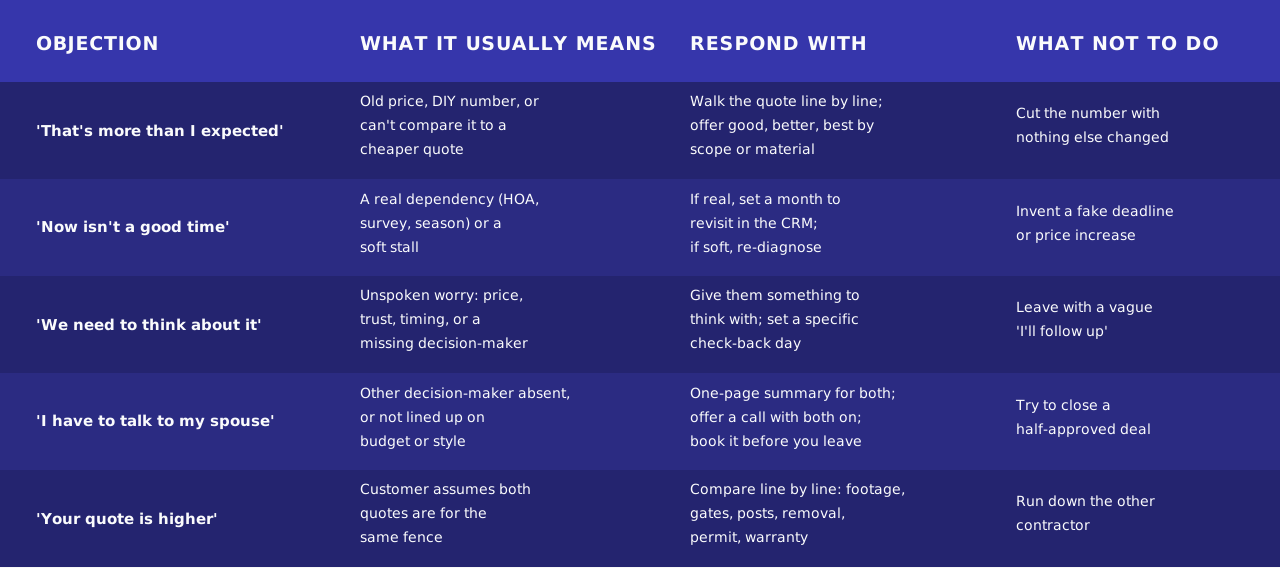
Want the matrix as a one-page sheet you can keep in the truck or hand a new salesperson? Grab the Objection Response Cheat Sheet: the five objections, the diagnosing questions, and the responses, on one page.
Download NowHandling the five objections you'll hear most
These five cover most of what you'll hear on a fence quote. Each one gets the same treatment: what it usually means, how to check, and the move that works.
"That's more than I expected"
This usually means an old price, a DIY number, or a materials-only figure was in their head. Or they're holding your quote next to a cheaper one and can't see the difference. Diagnose it. Is it the total or the monthly? Which line are they reacting to? Have they seen what the cheap quote leaves out, like removal, the permit, or post depth?
Then respond. Walk the quote line by line so the labor, equipment, haul-away, and site work are visible. Offer a good, better, best by changing scope or material. A shorter run, or pressure-treated pine instead of cedar, before you touch your margin. Don't drop the number with nothing else changed. That tells the customer the first price was padded, and they'll push on the next one too.
"Now isn't a good time"
This usually means a real dependency, such as HOA approval, a survey, a budget that frees up next quarter, or the season. Or it's a soft stall covering price or trust. Diagnose it. Ask, "Is that your schedule, or something that has to happen first?"
If it's real, pick a month to circle back and put it in your CRM so it doesn't get lost. If it's a soft stall, it's usually price or trust wearing a timing coat. Go back to diagnosing. Don't invent a fake deadline or a price increase you don't actually expect just to force it.
"We need to think about it"
This usually means an unspoken worry about price, trust, timing, or a decision-maker who isn't in the room. Diagnose it. Ask, "Fair enough, what's the main thing you're weighing?" Then isolate.
Respond by giving them something real to think with. A line-by-line scope comparison. Photos of three fences you built like theirs. Your license and insurance, and the warranty in writing. Then set a specific day to check back, not "sometime." Don't leave with a vague "I'll follow up." A next step with no date is how a warm quote goes cold.
"I have to talk to my spouse"
This usually means the other decision-maker wasn't there, or the two of them aren't lined up on budget or style. Diagnose it. Ask, "What do you think they'll want to know?" That surfaces the real question.
Respond by handing over a one-page summary both people can read, with scope, price, timeline, and what's not included. Offer a quick call with both on the line. Book that follow-up before you leave the driveway. Don't try to close a half-approved deal. It falls apart later as a cancellation or a fight over a change order.
"Your quote is higher than the other guy's"
This usually means the customer thinks both quotes are for the same fence. They almost never are. Diagnose it. Ask what the other quote includes: footage, gate count and hardware, post depth and spacing, old-fence removal, material grade, who pulls the permit, and the warranty.
Then line the two up item by item so they're comparing the same job. If you're still higher for the same scope, show what the extra buys. Deeper posts, a real warranty, a crew that shows up. Or adjust the scope out in the open. Don't run down the other contractor. It reads as nervous. Let the line-by-line do the work.
What not to do when you hit an objection
A few habits turn a normal objection into a lost job. Watch for these:
- Arguing, or "yes, but." It makes the customer dig in instead of rethinking.
- Discounting on reflex. It confirms the first price wasn't straight, and it trains the customer to push every time.
- Inventing urgency. Fake shortages, a false "last chance," or a price hike you don't expect. FTC advertising guidance says claims have to be truthful and backed up, so keep anything you say about price, supply, or deadlines accurate. This is an operating guardrail, not legal advice.
- Leaning on pressure. A customer who feels pushed stops listening and starts looking for the exit.
- Skipping the isolate step, so you answer one objection while two more sit there unspoken.
- Walking away with no next step and no date on the calendar.
When to walk away
Some objections are the customer telling you this isn't a fit. Spot them and close the file clean. Walk away when any of these are true:
- The budget gap is real and no amount of scope-trimming closes it.
- The customer wants to rewrite your contract so you carry all the risk.
- The job depends on a boundary line or a neighbor dispute that isn't yours to settle.
- The whole thing is already a fight before anyone's dug a hole.
Leave the quote good through its printed date, write down the reason if they give one, and don't argue with it.
A clean "not now" keeps the door open and keeps your pipeline honest. A dragged-out chase after a dead lead just clogs it. If you want this built into how your shop already runs, the diagnosing questions, the cheat sheet, and the CRM reminders, book a growth call and we'll map it to your process.
Put objection handling to work
Objections are missing information, not a no. Diagnose the real one before you answer. Run the four steps: acknowledge, isolate, respond, confirm. Answer price with scope and options, never a reflex discount, and know which objections mean it's time to walk. Do it this way and objection handling stops feeling like a fight. It becomes the step where you find out what the customer actually needs to hear to say yes.
This is Stage 4 of our full fence lead-response system, which maps every step from a new inquiry to a signed job. You'll find more of the sales-side playbook in the Pax Pro fence contractor blog, including how to estimate a fence job and fence estimate follow-up.
Download NowWant to Know More?
Book A Call
Frequently Asked Questions
-
Diagnose first: ask whether it's the total or the monthly, which line they're reacting to, and whether they've seen what the cheaper quote leaves out. Then make the cost visible — labor, equipment, disposal, overhead, site work — and offer a good, better, best option by changing scope or material rather than cutting your margin. Dropping the number with nothing else changed tells the customer the first price was padded.
-
Treat it as an unspoken concern, not a decision. Ask what they're mainly weighing, then isolate whether it's price, trust, timing, or a missing decision-maker. Give them something concrete to think with — a line-by-line scope comparison, photos of similar finished jobs, written warranty terms — and set a specific, low-pressure time to check back. Leaving with "I'll follow up sometime" is how quotes go cold.
-
Give them a one-page summary both people can read: scope, price, timeline, and what's excluded. Ask what the other person will want to know so you can address it now, and offer a short call with both present. Book that follow-up before you leave. Don't try to close a half-authorized deal — it tends to unravel later as a cancellation or a change-order dispute.
-
Assume the customer thinks the two quotes cover the same job — they usually don't. Ask what the other quote includes: footage, gates, post depth and spacing, old-fence removal, material grade, permit responsibility, warranty. Line the two up item by item so they're comparing the same scope, then justify any real difference by what the customer actually gets. Don't run down the other contractor; let the comparison do the work.
-
Walk away when the budget gap is real and scope can't close it, when the customer wants contract terms you won't sign, when the job hinges on an unresolved boundary or neighbor dispute you can't control, or when the interaction is adversarial before any work starts. Leave the quote valid through its stated date, note the reason if they give one, and don't argue with the answer. A clean "not now" keeps the door open and keeps your pipeline data honest.