 Phone: (021) 073-9955
 Location: New Zealand



Google Ads for Fence Companies: Costs, Keywords and Campaign Setup
Google Ads can work well for fence companies because it reaches property owners while they’re actively searching for installation or repair services. But clicks and form submissions don’t tell you whether a campaign is profitable. You need to track each lead through qualification, estimating, booking and completed work.
That distinction changed the result for North Star Fence in Oregon. Its cost per lead started at $19, dropped to $16 and eventually reached $8 after we refined the keywords, added exclusions and tested different landing pages. Once the campaign stabilized, the company averaged five booked jobs per week, tracked through a custom CRM.
Key takeaways
- Build campaigns around profitable fence jobs rather than putting every service into one campaign.
- Start with a controlled budget while you test keywords, search terms and landing pages.
- Exclude employment, DIY, retail and unsupported-service searches before they consume the budget.
- Match each ad group to a landing page that reflects the material or job the homeowner searched for.
- Track qualified leads, estimates and booked jobs in a CRM. Raw form counts aren’t enough.
- Increase the budget only after the campaign produces consistent, serviceable opportunities.
Contents
- 1. Do Google Ads work for fence companies?
- 2. What do Google Ads cost?
- 3. How to calculate an affordable cost per lead
- 4. Which fence jobs should receive budget?
- 5. How to structure a fence-company campaign
- 6. The best Google Ads keywords for fence companies
- 7. Negative keywords and exclusions
- 8. Location targeting
- 9. Landing-page requirements
- 10. Tracking qualified leads and booked jobs
- 11. Search Ads versus Local Services Ads
- 12. Seasonal planning
- 13. Common mistakes
- 14. A 30-day launch checklist
- 15. Frequently asked questions
Do Google Ads work for fence companies?
Google Ads can work for fence companies when campaigns target jobs the company can profitably estimate and complete. Strong results depend on buyer-intent keywords, accurate service-area targeting, focused landing pages, fast lead follow-up and tracking that connects each enquiry to an estimate, booked job and final revenue.
Fencing is a good match for paid search because the homeowner often reveals what they want in the query.
Someone searching for “vinyl fence installer near me” has probably decided on a material. A search for “pool fence contractor” may involve a safety or code deadline. A person typing “fence panels Home Depot” is likely shopping for materials and may never hire an installer.
Those searches shouldn’t receive the same bid, ad or landing page.
Google Ads becomes a poor fit when a fence company:
- Can’t answer new calls or texts quickly.
- Has no estimator capacity.
- Doesn’t know which job types are profitable.
- Serves an area too small to generate enough searches.
- Has weak project photos, reviews or sales follow-up.
- Can’t distinguish spam from qualified enquiries.
- Measures every form as a successful lead.
More budget won’t repair those problems. It usually exposes them faster.
North Star Fence: how testing reduced CPL from $19 to $8
North Star Fence serves customers in Oregon. From March 15 through June 28, we started its campaign at a modest $50 per day. The plan wasn’t to chase maximum volume immediately. We wanted enough traffic to compare landing pages and find searches that showed real buyer intent.
That first stage produced leads at roughly $19 each.
The number wasn’t terrible in isolation, but the account still attracted irrelevant searches. Some people were looking for jobs in the area. Others used vague terms that sounded related to fencing but didn’t indicate an installation or repair project.
The previous account setup had barely used keyword exclusions. Budget was spread across low-intent searches, while an occasional expensive keyword consumed a large share of the daily spend.
We added exclusions, reviewed the search terms and tested new landing pages. CPL fell from $19 to $16. After more refinement, it reached $8.
Only then did we scale the daily budget from $50 to $100 and later to $175.
That order matters. Increasing the budget before improving traffic and conversion quality would have purchased more of the same waste.
What happened after a lead submitted the form
The landing page collected:
- First name
- Last name
- Email address
- Phone number
- Fence type
- Estimated budget
- Project address
Those details were sent to a custom CRM.
The lead then received a text message to start the conversation and an email containing examples of North Star Fence’s strongest completed projects. This meant the prospect didn’t submit a form and sit unattended while requesting quotes from other installers.
Fence type was also used to assign an estimated opportunity value based on North Star Fence’s average price for that material or project category. The stated budget helped classify the opportunity as low, medium or high priority.
North Star Fence could then decide who needed immediate follow-up and how each estimate fit into the schedule. Once the campaign stabilized, the CRM recorded an average of five booked jobs per week.
That’s the point of the system. The ad creates the first interaction. The landing page qualifies it. The CRM shows whether it became work.
How much do Google Ads cost for a fence company?
There isn’t one national price for fence-company Google Ads. Cost changes by metro area, season, competition, material, match type and the quality of the account.
A residential installer in a smaller Oregon market won’t face the same auction as a company bidding across Dallas, Atlanta or Southern California. Repair terms may cost less than installation terms but produce smaller jobs. Commercial fencing may generate fewer enquiries with much larger potential values.
You’ll see wide figures quoted around the web, often something like $5 to $15 per click or $40 to $75 per lead. Treat any number like that as an illustrative planning range, not a promise, because the definitions behind it are rarely stated. Before you trust a benchmark, check:
- Which states and metros were included?
- Was branded traffic removed?
- Did “lead” mean any form, a qualified prospect or a booked estimate?
- Were Search Ads and Local Services Ads combined?
- What date range and season did the data cover?
- Were spam, duplicate leads and job seekers excluded?
Without those definitions, a low CPL can look impressive while producing little revenue.
A modeled budget example
Suppose a fence company spends $3,000 per month.
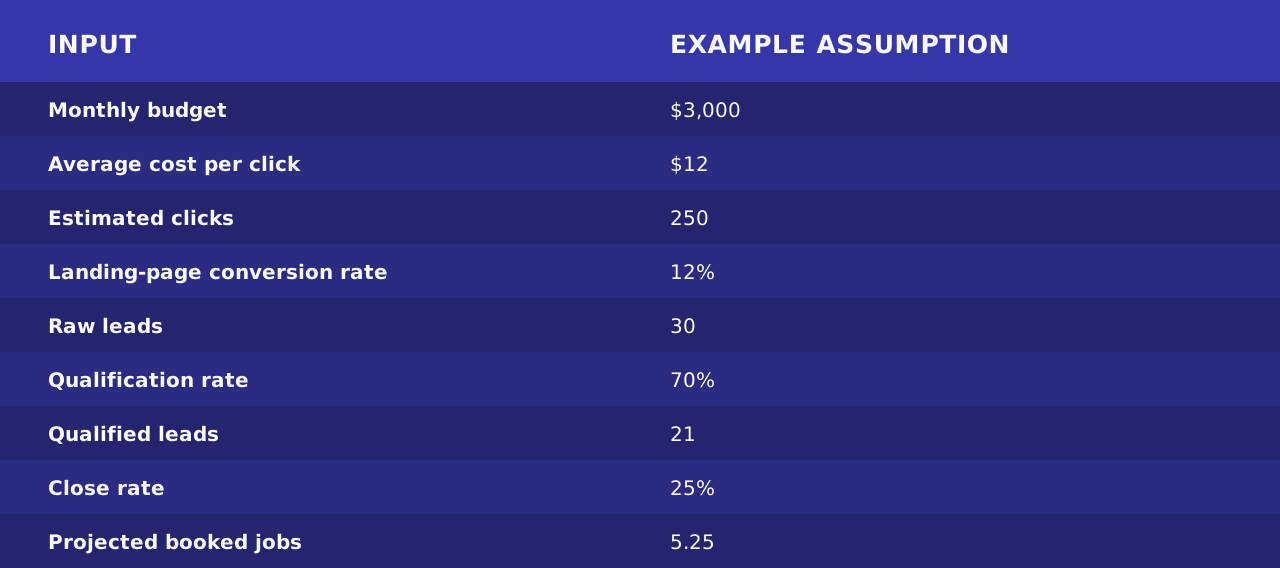
In the modeled example, a $3,000 monthly budget at a $12 average cost per click buys about 250 clicks. A 12% landing-page conversion rate turns those into roughly 30 raw leads, or about $100 per raw lead. If 70% qualify, that’s 21 qualified leads. At a 25% close rate, the campaign produces about 5 booked jobs a month, near $570 per booked job before you subtract job costs.
This is a model, not an industry benchmark. Replace every assumption with your own numbers.
If only half the leads are serviceable, the forecast changes. If your estimator closes 40%, it changes again. The useful part is the calculation, not the example result.
Calculate what your fence company can afford to pay
Start with the economics of a booked job.
You need to know:
- Average contract value by fence type.
- Gross profit after labor, materials and direct job costs.
- Percentage of qualified leads that receive an estimate.
- Percentage of estimates that become booked jobs.
- Percentage of raw enquiries that qualify.
One practical formula is:
Allowable raw CPL = allowable cost per booked job × qualification rate × close rate
Imagine you’re willing to spend $800 to acquire a booked vinyl-fence project. Sixty percent of raw leads qualify, and 25% of qualified leads become jobs.
The calculation is:
$800 × 0.60 × 0.25 = $120 allowable raw CPL
This doesn’t mean you should aim to pay $120. It means the campaign may still be economically viable below that threshold.
Now compare that with a small repair. If the allowable acquisition cost is only $150 using the same qualification and close rates, the allowable raw CPL drops to $22.50.
That’s why one universal target CPL doesn’t work. Job mix matters.
Choosing which fence jobs get advertising budget
Split budget according to serviceability and profit potential.
Residential fence installation
Residential installation often includes:
- Wood privacy fences
- Vinyl fences
- Aluminum or ornamental fences
- Chain-link fences
- Pool barriers
- Gates
- Fence replacement
A homeowner searching by material is often further into the buying process than someone searching only for “fence.”
Build the ad and page around that specificity. A vinyl-fence search should lead to vinyl project photos, relevant benefits, service-area information and a clear estimate request.
Fence repair
Repair traffic can generate enquiries quickly, especially after storms. The tradeoff is job value.
A leaning post, damaged gate or single broken panel may not support the same acquisition cost as a full installation. Keep repair in a separate campaign when it has:
- A different budget.
- A smaller service area.
- Different scheduling rules.
- A different landing page.
- Lower allowable cost per booked job.
Commercial and security fencing
Commercial buyers have different needs. They may care about bonding, insurance, access control, bid documents, deadlines and previous commercial work.
Don’t mix commercial traffic with residential privacy-fence searches if the sales process and proof are different. Give commercial work its own campaign and landing page.
Jobs to exclude or isolate
Depending on what the company offers, these may need exclusions or separate campaigns:
- Materials-only orders
- Temporary fence rental
- Agricultural fencing
- Invisible dog fences
- Fence staining or painting
- Deck-only work
- DIY planning
- Unsupported materials
- Out-of-area projects
Never copy another contractor’s exclusion list blindly. A term that is worthless to one fence company may describe a profitable service for another.
How should a fence company structure Google Ads?
Start with job economics, then build down into material and intent.
A workable structure might look like this:
Campaign 1: Residential installation
Ad groups:
- Wood privacy
- Vinyl
- Aluminum and ornamental
- Chain-link
- Pool fencing
Campaign 2: Fence repair and replacement
Ad groups:
- Fence repair
- Gate repair
- Storm damage
- Fence replacement
Campaign 3: Commercial fencing
Ad groups:
- Commercial chain-link
- Security fencing
- Access gates
- Industrial enclosures
This isn’t a rule that every fence company must follow. Separate campaigns when you need control over budget, geography, landing pages or sales outcomes.
Don’t create twenty tiny campaigns that never collect enough data. But don’t put a $15,000 commercial security project and a $300 gate repair under one budget, either.
Keyword match types
Google Ads supports broad, phrase and exact match keywords. Broad match can reach more related searches, while phrase and exact match place tighter limits on how searches relate to the keyword. Google’s keyword-matching documentation explains how the options overlap.
For a new local-service campaign with limited conversion history, exact and phrase match can provide more control while you learn which searches produce real opportunities.
Broad match can be tested later, but only when:
- Conversion tracking is reliable.
- Negative keywords are maintained.
- The account has enough useful conversion history.
- Bidding is trained on qualified outcomes rather than every raw form.
The search-terms report matters more than the keyword list alone. It shows the searches that actually triggered the ads and helps you find irrelevant traffic, new keyword ideas and match-type problems. Google Ads explains the search-terms report here.
What are the best Google Ads keywords for fence companies?
The strongest starting keywords usually combine a service, material, contractor modifier, quote modifier or location.
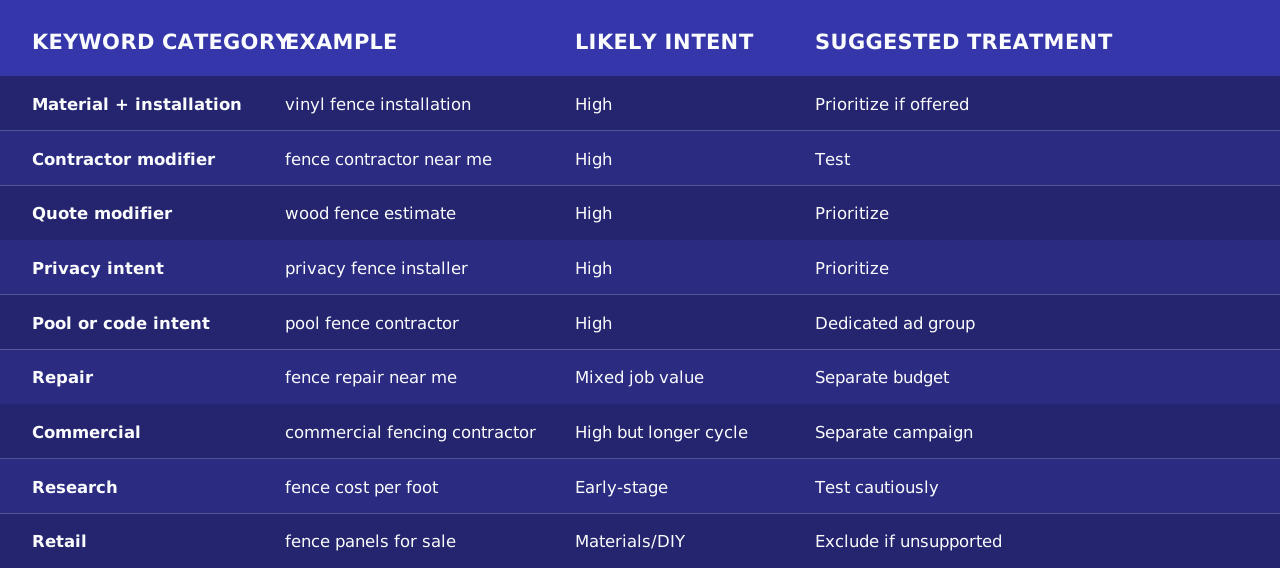
Material-plus-installation, contractor-modifier and quote-modifier searches such as “vinyl fence installation,” “fence contractor near me” and “wood fence estimate” carry high intent and deserve their own ad groups. Privacy, pool and code searches are also high intent. Repair terms convert well but vary in job value, so give them a separate budget. Commercial terms are high value with a longer sales cycle and belong in a separate campaign. Early-stage research terms like “fence cost per foot” can be tested cautiously, and retail terms like “fence panels for sale” should be excluded when you don’t sell materials.
Buyer intent is more important than surface relevance.
“Fence jobs near me” contains the word “fence,” but the person wants employment. “How to install fence posts” may attract a homeowner who never plans to hire. “Vinyl fence quote” is much closer to a sales conversation.
Related guide: how to advertise a fence company, for where paid search fits among the other lead channels.
Which negative keywords should fence contractors use?
Negative keywords stop ads from appearing for searches you don’t want to target. Google recommends using them to separate relevant customers from people looking for a different product or service. Negative keywords also behave differently from positive keywords and don’t automatically cover every close variation. Google Ads documents those rules here.
North Star Fence’s old account had almost no exclusions. That was its biggest structural problem.
Employment searches
Possible exclusions:
- jobs
- salary
- hiring
- career
- apprenticeship
- training
DIY searches
Possible exclusions:
- DIY
- how to build
- plans
- tutorial
- instructions
Retail and supply searches
Possible exclusions:
- panels
- posts
- parts
- wholesale
- used
- Home Depot
- Lowe’s
Wrong meaning of “fencing”
Possible exclusions:
- fencing sport
- sword
- foil
- epee
- lessons
- competition
Unsupported services
Possible exclusions:
- rental
- temporary
- invisible dog fence
- staining
- painting
- agricultural
Review these against the company’s real service list before adding them. If North Star Fence sells materials, “panels” may deserve a campaign rather than an exclusion. If a contractor installs agricultural fencing, excluding it would block good prospects.
And don’t set the list once and forget it. Review new search terms weekly during the first month.
Related guide: fence company SEO, since the search terms you exclude in Ads often overlap with the queries you want to rank for organically.
Configuring location targeting for a fence service area
Target the territory crews and estimators can serve profitably.
Google Ads allows targeting by country, area, radius and location group, but Google also warns that very small targets may receive limited or intermittent delivery. Google’s location-targeting instructions explain the available options.
For a fence company, the selected map radius is only the starting point.
Review:
- Actual project addresses.
- Travel time.
- Estimator availability.
- Licensing boundaries.
- Material-delivery costs.
- Crew scheduling.
- Lead volume by ZIP code.
- Close rate and job value by area.
A 40-mile radius may be fine for a large installation and unprofitable for a small repair. If the economics differ, use separate geography or campaigns.
Check the campaign’s advanced location settings too. A person interested in Oregon isn’t necessarily located in North Star Fence’s service area. Review actual enquiry addresses instead of assuming the location setting is perfect.
What should a fence-company landing page include?
The landing page should answer four questions quickly:
- 1. What fence service do you provide?
- 2. Where do you provide it?
- 3. Why should the homeowner trust you?
- 4. How can they request an estimate?
For a material-specific campaign, include:
- A headline matching the search.
- Real photographs of that fence type.
- Service-area information.
- Reviews tied to similar projects.
- Material benefits and limitations.
- A clear phone and form CTA.
- Permit, survey or HOA guidance.
- Timeline expectations.
- A short qualification form.
- A fast mobile experience.
North Star Fence’s landing pages were tested before the budget increased. That process helped move CPL from $19 to $16 and then $8.
The form asked for enough information to prioritize the opportunity without turning the request into a ten-minute application. Fence type, budget and address helped North Star Fence judge fit before follow-up.
The page shouldn’t pretend every project is identical. A pool barrier, wood privacy fence and commercial chain-link enclosure have different buyers and concerns.
Related guide: the fence company website checklist, which covers the quote killers that sink landing-page conversion.
How should fence companies track Google Ads leads?
Track the stages separately.
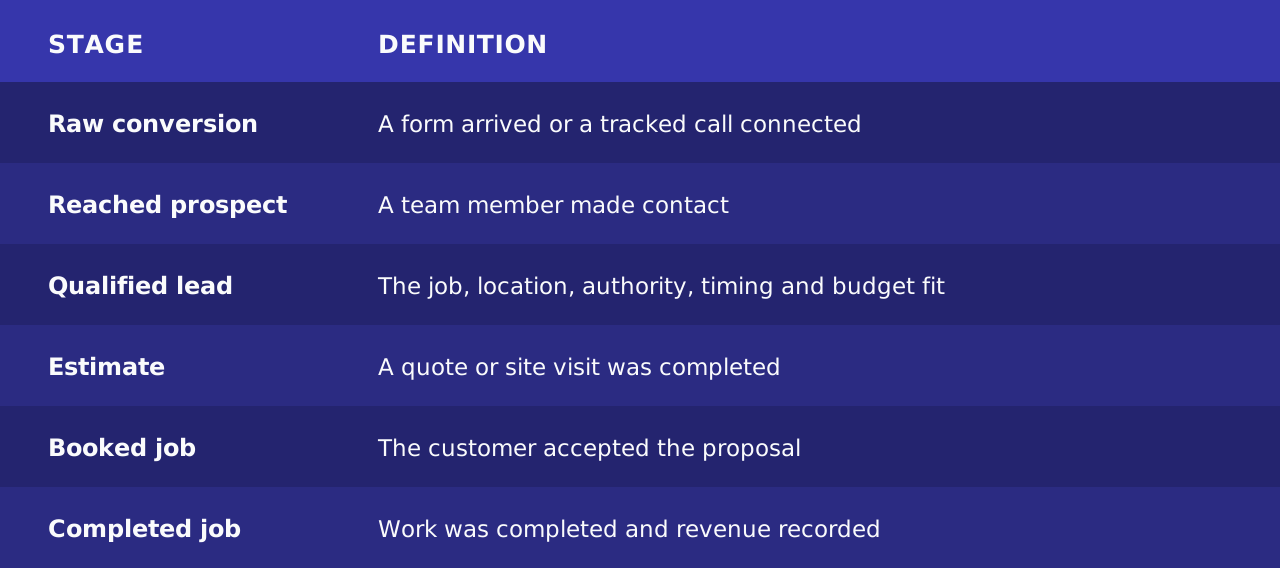
The six stages run in order: a raw conversion (a form arrived or a tracked call connected), reached prospect (a team member made contact), qualified lead (job, location, authority, timing and budget fit), estimate (a quote or site visit was completed), booked job (the customer accepted the proposal), and completed job (work finished and revenue recorded).
If those stages live in one “lead” column, you can’t tell where the process failed.
North Star Fence’s custom CRM received form data automatically. The system sent an initial text and a project email, assigned an estimated opportunity value by fence type and labeled budget priority.
That gave the team a working sales queue. It also allowed booked jobs to be tied back to the original lead source.
Send better conversion data back to Google
Google’s enhanced conversions for leads can use hashed first-party information, such as email addresses, alongside offline outcome data to improve attribution. Google recommends importing qualified or converted lead outcomes and retaining click identifiers such as GCLID where possible. See Google’s current enhanced-conversions guidance.
That means you can teach the account which leads became customers instead of optimizing toward every form submission.
Handle customer information carefully. Collect only what the business needs, disclose how it’s used, secure the CRM and follow applicable privacy rules.
Related guide: why the first fence contractor to respond wins the job, because tracked leads only pay off when follow-up is fast.
Google Search Ads vs Local Services Ads
Search Ads and Local Services Ads can work together, but they’re different products.
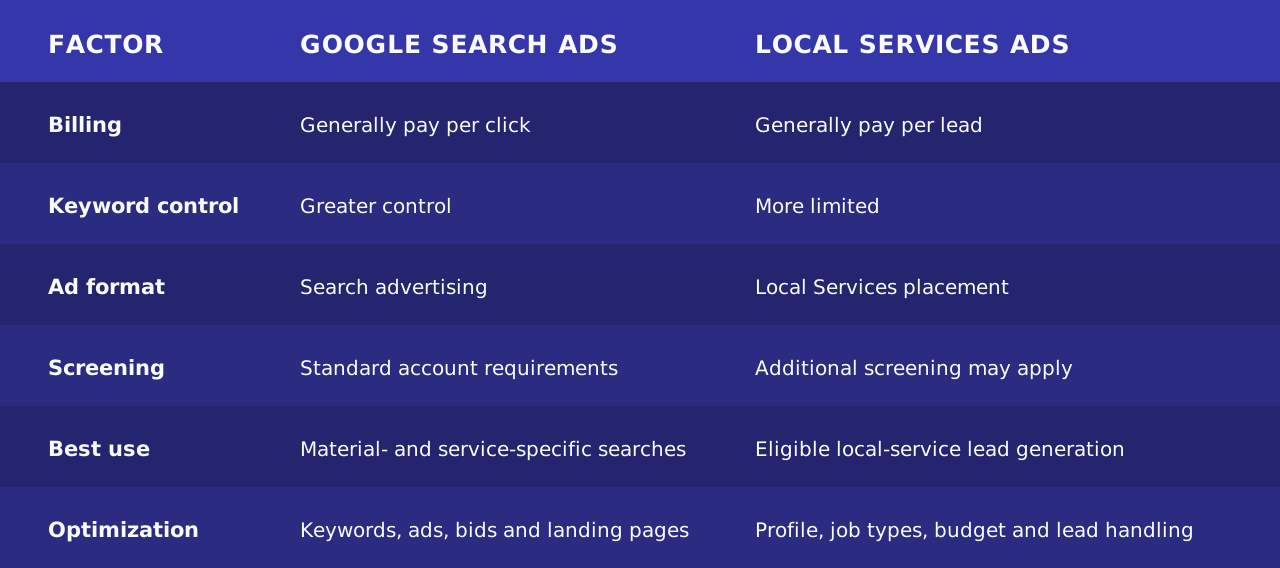
Search Ads generally bill per click and give you greater control over keywords, ads, bids and landing pages, with standard account requirements. Local Services Ads generally bill per lead, offer more limited keyword control, may require additional screening, and are optimized through your profile, job types, budget and lead handling. Search Ads suit material- and service-specific searches, while Local Services Ads suit eligible local-service lead generation.
Search Ads are useful when you want precise control over searches such as “vinyl fence installation” or “commercial chain-link contractor.”
Local Services Ads may provide another route to local leads where fencing is eligible. Check current availability, job categories and screening requirements directly with Google before planning the budget.
Don’t compare the channels on raw CPL alone. Compare:
- Qualified lead rate.
- Estimate rate.
- Booked-job rate.
- Average job value.
- Cost per booked job.
- Completed revenue.
A more expensive lead source may still win if it produces better projects.
Related guide: what Angi, HomeAdvisor and Networx leads actually cost, for comparison with other pay-per-lead channels.
When should a fence company scale its budget?
Scale when the system is stable.
North Star Fence began at $50 per day, increased to $100 and later reached $175. Each increase followed improvements in keyword quality and landing-page conversion.
Consider increasing the budget when:
- Search terms match profitable services.
- CPL is stable.
- Qualified lead rate is acceptable.
- Booked jobs are tracked.
- The sales team responds quickly.
- Estimators and crews have capacity.
- The company can handle more work without harming service.
Pause or reduce spend when:
- The landing page fails.
- Calls aren’t answered.
- Estimate slots are full.
- Materials are unavailable.
- Crews can’t take additional work.
- Search terms drift toward poor-fit traffic.
- Tracking can’t reconcile leads with jobs.
- Acquisition cost exceeds sustainable profit.
Budget changes should follow operating capacity. Otherwise, the campaign can create demand the company can’t serve.
Seasonal Google Ads planning for US fence companies
“Launch in February” isn’t a national strategy.
Cold-winter states
Search and installation demand may climb before spring. Use the quieter period to build landing pages, validate tracking and prepare campaigns. Increase spend when homeowners begin planning projects and crews can schedule installations.
Sun Belt and desert markets
Demand may run throughout the year, but extreme heat, monsoon periods and local moving seasons can affect scheduling. Use your own booked-job history rather than borrowing a northern calendar.
Storm-prone markets
Keep repair and replacement campaigns ready. A weather event can create sudden demand, but only advertise services the team can respond to quickly.
Temperate markets such as parts of Oregon
Seasonal shifts still matter, though work may not stop completely. Compare search volume, qualified leads and completed jobs by month. North Star Fence’s March 15–June 28 campaign period captured spring into early summer, so its results shouldn’t automatically be treated as a year-round benchmark.
Common Google Ads mistakes fence companies make
1. Targeting every fence-related search
A keyword can mention fencing and still have no buying intent. Employment, sport, materials and DIY searches are common sources of wasted spend.
2. Increasing budget before fixing the account
North Star Fence stayed at $50 per day while keywords and landing pages were tested. Scaling a weak setup only buys bad traffic faster.
3. Sending every click to the homepage
A general homepage rarely answers material-specific questions as well as a focused landing page.
4. Counting every form as a qualified lead
Spam, unsupported projects and out-of-area requests shouldn’t train bidding or performance reports.
5. Mixing high-value installation with small repair work
Different job economics need different budgets and acquisition targets.
6. Ignoring the search-terms report
The keyword list shows what you selected. The search-terms report shows what people actually typed.
7. Using one national seasonality rule
Oregon, Michigan, Arizona and Florida don’t share the same installation calendar.
8. Measuring CPL but not booked jobs
A cheap lead that never receives an estimate has little business value.
9. Following up too slowly
Fence buyers often request several quotes. An immediate text and useful project email can start the conversation while intent is still high.
10. Giving every lead the same priority
Fence type, budget, address and schedule can help the team identify which opportunities need fast attention.
A 30-day Google Ads launch checklist for fence companies
- 1. List the fence jobs the company wants.
- 2. Remove unsupported or unprofitable services.
- 3. Calculate allowable cost per booked job.
- 4. Define the real service area.
- 5. Create campaigns around job economics.
- 6. Build ad groups by material or intent.
- 7. Create matching landing pages.
- 8. Install call and form tracking.
- 9. Connect leads to a CRM.
- 10. Define qualified, estimated and booked stages.
- 11. Add employment, DIY and retail exclusions.
- 12. Launch with a controlled budget.
- 13. Review search terms several times during the first week.
- 14. Check lead quality rather than form volume alone.
- 15. Test one landing-page change at a time.
- 16. Confirm text and email follow-up.
- 17. Record estimate and booking outcomes.
- 18. Import useful offline outcomes where appropriate.
- 19. Adjust bids and exclusions from real search data.
- 20. Scale only after results remain consistent.
Frequently asked questions
How much should a fence company spend on Google Ads?
Start with a budget that can collect enough clicks and leads to test the campaign without creating unacceptable risk. North Star Fence began at $50 per day, then moved to $100 and $175 after keyword and landing-page performance improved. Your starting point should reflect local CPCs, margins, service area and sales capacity.
What is a good cost per lead for a fence contractor?
A good CPL is one that produces profitable booked jobs. North Star Fence reduced CPL from $19 to $8, but that result came from one Oregon campaign during a specific March-to-June period. Calculate your target using qualification rate, close rate, average gross profit and allowable acquisition cost.
What keywords work best for fence-company Google Ads?
Start with terms that combine contractor intent, installation, material, quote language or location. Examples include “vinyl fence installation,” “wood fence estimate,” “privacy fence contractor” and “commercial fencing company.” Review actual search terms and exclude employment, DIY, retail and unsupported services.
Should repair and installation use separate campaigns?
Separate them when job value, budget, service area, landing page or sales process differs. A small gate repair may not support the acquisition cost of a full privacy-fence installation. Separate campaigns make those economics visible.
Should fence companies use broad match?
Broad match can expand reach, but it needs reliable conversion data, active search-term reviews and a strong negative-keyword system. A new account with limited history may benefit from the control of exact and phrase match while the team learns which searches produce qualified work.
How quickly can Google Ads generate fence leads?
Ads can begin receiving impressions and clicks soon after approval, but consistent qualified leads take testing. North Star Fence’s CPL improved in stages as we refined keywords, exclusions and landing pages. Don’t judge the final economics from the first few conversions.
Are Local Services Ads worth using?
They may be worth testing where fencing is eligible. Compare them with Search Ads using qualified leads, estimates and booked jobs rather than platform CPL alone. Availability and screening requirements can change, so confirm current details with Google.
Is Google Ads better than SEO for fence companies?
They solve different timing problems. Google Ads can capture existing demand quickly but stops producing traffic when spend stops. Fence company SEO takes longer to build and can keep generating visibility without paying for every click. Many established fence companies use Ads for immediate demand while building organic and local search coverage.
Build around work you can finish
The strongest fence-company campaign begins with the jobs the business wants, not a giant keyword list.
Define profitable work. Target the right service area. Match each search to a useful landing page. Exclude traffic that can’t become a customer. Then track the lead through the CRM until it becomes an estimate, a booked job or a clear loss.
North Star Fence didn’t move from $19 to $8 CPL by spending more on the original setup. The improvement came from testing, exclusions, landing-page refinement and fast follow-up. Once those parts worked consistently, scaling made sense.
If you want to find out where your fence-company ad budget is being wasted, request a Google Ads review covering search terms, location targeting, landing pages, conversion tracking and cost per booked job.
Want to Know More?
Book A Call
Frequently Asked Questions
-
Yes. No contracts. Just give us 30 days notice so we can gather any leads we've generated for you and hand them over.
-
14 days. We send you an onboarding form, you give us your details, and we build your website. We also have an onboarding call to map out your current business structure so we can build your growth system around your business structure.
-
Yes, this is what most business owners do. You can upgrade your plan at anytime. No fees to switch.
-
No. We handle everything tech related for. We also provide personal training, videos and documents where it's needed.
-
We can build you a new website with location, service, and landing pages. We don't use templates or page builders.