 Phone: (021) 073-9955
 Location: New Zealand




How to Get More Fence Referrals: A Practical System
Most fence companies wait for referrals to appear on their own. Then the slow season arrives and somebody finally sends a message to every past customer in the database. If you want to know how to get more fence referrals, build the ask into every successful job while the customer is still excited about the result. Then make the introduction easy, reward good customers for opening their network, and track which referrals become paying fence jobs.
Key Takeaways
- The referral is a favor customers only grant after they trust the finished fence, so close the punch list before you ask.
- The highest-converting moment is the final walkthrough, once the homeowner says out loud that they're happy with the result.
- Keep the review request and the referral request separate. One Pax Pro client's referral message got a reply from six of every ten customers it reached, which is a response rate, not a close rate.
- A written reward tied to a paying job works: one Pax Pro client used a $50 Amazon gift card issued only after the referred customer bought. Size yours from your own gross profit.
- Track source, response time, estimates, paying jobs, and gross profit as separate numbers. Ten names mean nothing if none fit your service area or budget.
How Do Fence Companies Get More Referrals?
Fence companies get more referrals by asking satisfied customers at the right moment, making introductions easy, promoting finished projects to nearby homeowners, and earning trust with realtors and complementary contractors. Track each introduction, respond quickly, protect the referrer's reputation, and thank the source after the referred project becomes a paying job.
- Deliver work and communication that a customer feels safe recommending.
- Ask after the customer approves the fence during the final walkthrough.
- Give the customer a simple way to share your contact information.
- Turn completed installations into neighborhood proof.
- Build relationships with people who encounter fence demand before you do.
- Track and thank every source that sends a suitable opportunity.
Make Your Fence Company Worth Referring
A customer puts their own reputation on the line when they recommend your company. The finished fence matters, but so do the estimate, schedule, crew behavior, cleanup, gate adjustment, and response when something needs attention. Close the punch list before asking for access to that customer's friends and neighbors.
Good work makes you referable. It doesn't create a referral system by itself. A company can build straight fence lines for years and still receive inconsistent word of mouth because nobody recognizes the right moment to ask.
Ask During the Final Walkthrough
The best moment is during the final walkthrough. Let the homeowner inspect the fence. Check the gates, latches, posts, transitions, and cleanup together. When the customer says they like the finished result, the referral ask is primed and ready.
Keep it brief: “I'm glad you're happy with the new fence. Most of our best projects come from customers introducing us to someone they know. If a neighbor or friend needs a fence, would you feel comfortable passing along my number?”
Don't force the script into every walkthrough. A complaint, unresolved punch list, or uncertain reaction means you fix the customer experience first. And don't ask while pressuring the customer for final payment. The positive reaction should trigger the request, not a box on a crew checklist.
Separate Your Review and Referral Requests
A Google review and a referral aren't the same favor. A review adds public proof. A referral asks the customer to introduce you to someone they know. Combining both requests in one message makes the customer decide which task to ignore.
If you don't ask during the walkthrough, run your normal review campaign first. Let it finish. A few days later, send a separate referral message to customers who were satisfied and easy to work with. This also gives the homeowner time to live with the fence and talk about it with neighbors.
One Pax Pro client ran this sequence and heard back from six of every ten customers they contacted. That's a 60% message response rate, not a 60% referral rate or close rate. The distinction matters. Track replies, introductions, estimates, paying jobs, and revenue as separate outcomes.
For more on building public trust before the referral ask, read our guide to Google reviews for fence companies.
Give Customers an Easy Referral Script
Your customer shouldn't have to write a sales pitch. Give them a phone number, short link, or contact card they can forward in seconds. The best referral request names the kind of introduction you want without making the customer feel cornered.
Follow-up text
“Hi [Name], I wanted to check that everything is working well with your new fence and gate. If you know a neighbor or friend planning a fence project, feel free to send them my contact information. We'd be glad to help.”
Shared-boundary introduction
“If your neighbor has questions about the shared boundary or wants an estimate for another section, I'm happy to speak with them. You can introduce us by text so they know why I'm reaching out.”
Your real campaign wording may be more refined. Keep it private if it gives your company an edge. What matters is the structure: contact a good customer, state the reason, make the introduction easy, explain any reward clearly, and remove pressure.
Create a $50 Referral Reward With Clear Rules
A $50 Amazon gift card has worked well for a Pax Pro client's program when it was issued only after the referred customer became a paying customer. A name, phone number, or estimate request didn't trigger the reward. A completed sale did.
The reasoning is simple. You want the introduction, but your customer is allowing you into their network. Their trust has value. Rewarding that access recognizes the contribution without paying for unqualified names.
Write the rules before promoting the offer. Define who qualifies, how the source is recorded, what counts as a paying job, when the card is delivered, and how duplicate claims are handled. If a typical referred installation produces $2,000 in gross profit and your acquisition-cost ceiling is 5%, your illustrative reward budget is $100, so the $50 card in the example above sits well inside that ceiling. Treat $50 as a starting point and use your own gross profit, not a competitor's headline number. If you reward partners or vendors regularly rather than one-off customers, check your reporting obligations first; the IRS Form 1099-NEC guidance explains when non-employee payments have to be reported.
Gift cards, staff time, and administration have costs, so referrals aren't literally free. The advantage is that the $50 expense occurs after revenue is won instead of before a lead appears.
Exclude Dissatisfied and Problematic Customers
Don't send a referral offer to every name in your phone. Remove anyone with unresolved work, a complaint, or obvious dissatisfaction. The current job needs attention; another introduction doesn't.
Also exclude customers who were consistently difficult to work with. The people they refer may bring similar expectations and buying behavior. Good-fit customers tend to know other good-fit customers, which is exactly why selection matters.
Turn One Fence Installation Into Neighborhood Referrals
A fence is visible. The next homeowner can see your crew, the straight line of a new wood privacy fence, or an aluminum pool enclosure without opening a search engine. Ask permission to leave a clean yard sign for a defined period. Provide a few referral cards, and give the customer finished-project photos they can share in a neighborhood Facebook group or on Nextdoor.
Shared boundaries create another opening. If a neighbor asks about cost, materials, or access while your crew is working, be helpful without turning the property into a sales floor. Offer an estimate and let the work provide the proof.
Pair this local visibility with a website that gives referred homeowners an obvious next step. Our fence company website checklist covers the proof and contact elements they expect.
Build Relationships With Real Estate Agents
Real estate agents don't need another stranger asking to “trade referrals.” They need contractors who won't embarrass them in front of a buyer or seller. Start by offering fast acknowledgement, clear estimates, accurate arrival windows, licensing and insurance documents where required, and client-friendly communication.
Look for situations where fence work affects the transaction: new-construction homes sold without fencing, inspection findings, pre-listing repairs, pool safety, pet containment, privacy, HOA requirements, and rental-property turnover.
Try this introduction: “Hi [Name], I help homeowners in [service area] with fence installation and repair. I know contractor recommendations reflect on the agent, so we prioritize fast acknowledgement, clear estimates, and professional client communication. If you need a backup fence contractor for a buyer, seller, or inspection issue, I'd be happy to help.”
When an agent makes an introduction, acknowledge it and contact the homeowner quickly, then close the loop without oversharing customer information. The next referral depends on how you handle the first one. Paid arrangements with real estate professionals can involve state rules, brokerage policies, licensing requirements, and disclosures. Verify the requirements that apply before offering compensation, including your state real estate commission's rules and, for agents who are members, the REALTOR® Code of Ethics disclosure standards. The FTC's endorsement guidance is a useful starting point for disclosure principles, but it isn't a substitute for state or professional advice.
Find Other Referral Partners for Your Fence Business
The best partner is someone who encounters a fence problem before the homeowner searches for a contractor. Home builders see buyers who need post-closing fencing. Landscapers and pool installers discover perimeter work during outdoor projects. Property managers face repairs, turns, and documentation needs. Surveyors and home inspectors spot boundary questions or visible defects.
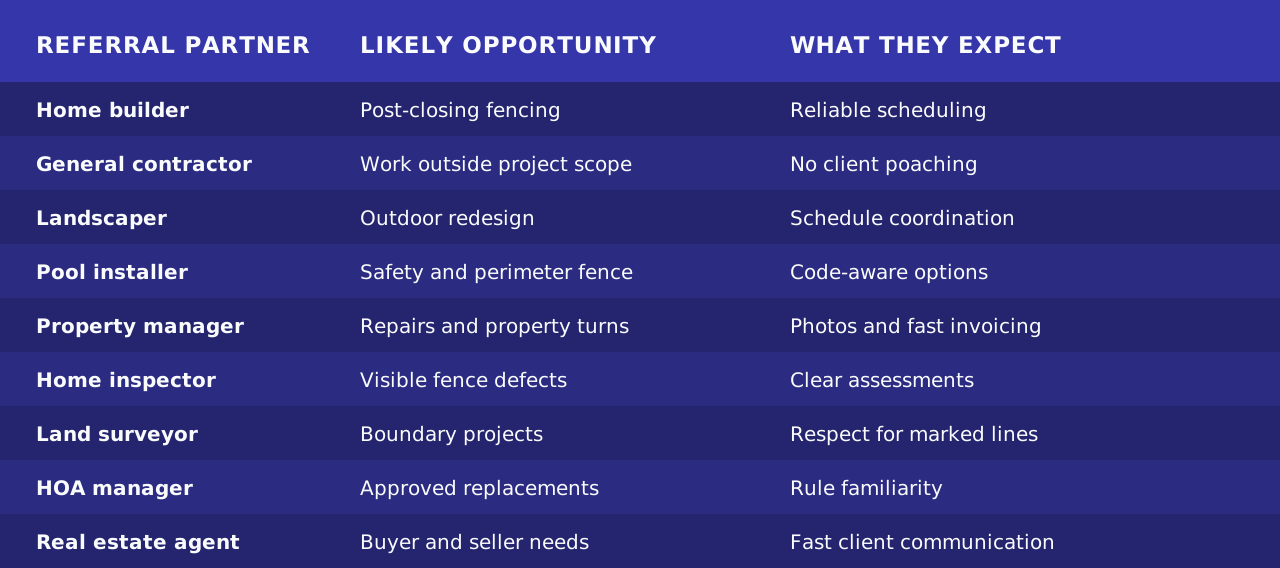
Don't pitch everyone at once. Pick five people whose customers, service area, and project values overlap with yours. Give each partner a clear job-fit description and a simple promise: quick contact, honest qualification, no client poaching, and a short update after the introduction.
Track Which Referrals Become Profitable Jobs
A spreadsheet is enough to start. Record the source, introduction date, homeowner, project type, ZIP code, estimated value, response time, estimate status, outcome, revenue, gross profit, reward, and whether the source referred again.
Measure the referral-to-estimate rate, referred-lead close rate, booked revenue, gross profit, reward cost, and repeat-referrer rate. Don't celebrate ten names if none matched your service area or budget. The result is a profitable job and a source who feels comfortable recommending you again.
Follow a 30-Day Fence Referral Plan
Week 1: Define the rules
Choose the projects and ZIP codes you want. Write the reward requirements, decide how referrals are attributed, and give the team one walkthrough ask and one follow-up message.
Week 2: Contact recent customers
Select satisfied, cooperative customers from recent jobs. Check that their fence and gates are performing well. Make the request only after confirming satisfaction, then record every response.
Week 3: Approach ten partners
Identify five realtors and five complementary contractors. Learn which clients they serve, then offer a specific response and communication standard instead of a vague networking request.
Week 4: Review the numbers
Count replies, introductions, estimates, paying jobs, gross profit, and rewards separately. Thank every productive source. Fix any step your crew or office can't perform consistently before adding more contacts.
Avoid These Fence Referral Mistakes
- Waiting until the slow season to contact customers.
- Asking before the walkthrough or punch list is complete.
- Requesting a review and referral in the same overloaded message.
- Sending offers to dissatisfied or poor-fit customers.
- Promising a reward without written qualification rules.
- Responding slowly and making the referrer look careless.
- Paying a professional partner without checking applicable rules.
- Counting introductions while ignoring revenue and gross profit.
The companies that get more fence referrals don't switch the program on when the calendar looks empty. They make the final walkthrough count, separate the review from the referral request, reward good customers after paying jobs, and treat every introduction like borrowed trust. Build that process into your closeout routine and your customer list can keep producing warm opportunities long after the crew leaves.
Book A CallWant to Know More?
Book A Call
Frequently Asked Questions
-
Ask after the customer confirms they are satisfied, ideally during the final walkthrough. Be specific about the introductions you want and give them a phone number or short link they can forward easily. Keep the request brief. If there is an unresolved problem or the customer seems hesitant about the finished work, fix the experience before asking.
-
The strongest moment is after the customer approves the completed fence during the final walkthrough. Another good opportunity is a genuine 14- to 30-day satisfaction check. You can also ask after a later warranty check-in. Avoid making the request while collecting payment, handling a complaint, or finishing unresolved punch-list work.
-
A clear reward can increase participation, but it cannot replace good service. One Pax Pro client's program offered a $50 Amazon gift card after a referral became a paying customer. Set the amount from your gross profit, write the qualification and payout rules, and check any laws or professional policies that apply to the person receiving it.
-
Reduce the risk an agent takes when recommending you. Respond quickly, arrive when promised, provide clear estimates, communicate professionally with the client, and close the loop after an introduction. Target situations such as new-construction fencing, inspection findings, pool safety, pet containment, privacy needs, HOA replacements, and rental-property repairs.
-
Start with satisfied past customers and nearby homeowners. Strong professional partners can include realtors, home builders, general contractors, landscapers, pool installers, property managers, home inspectors, surveyors, HOA managers, outdoor-living suppliers, and noncompeting fence contractors. Prioritize partners whose customers, service areas, and project types closely match your business.