 Phone: (021) 073-9955
 Location: New Zealand



Missed-Call Text-Back for Fence Companies: A Setup Guide
Curtis founded Pax Pro, a marketing agency that works only with fence contractors. He builds the missed-call text-back and lead-response systems that turn quote requests into signed jobs, and writes about the sales side of running a profitable fence calendar.
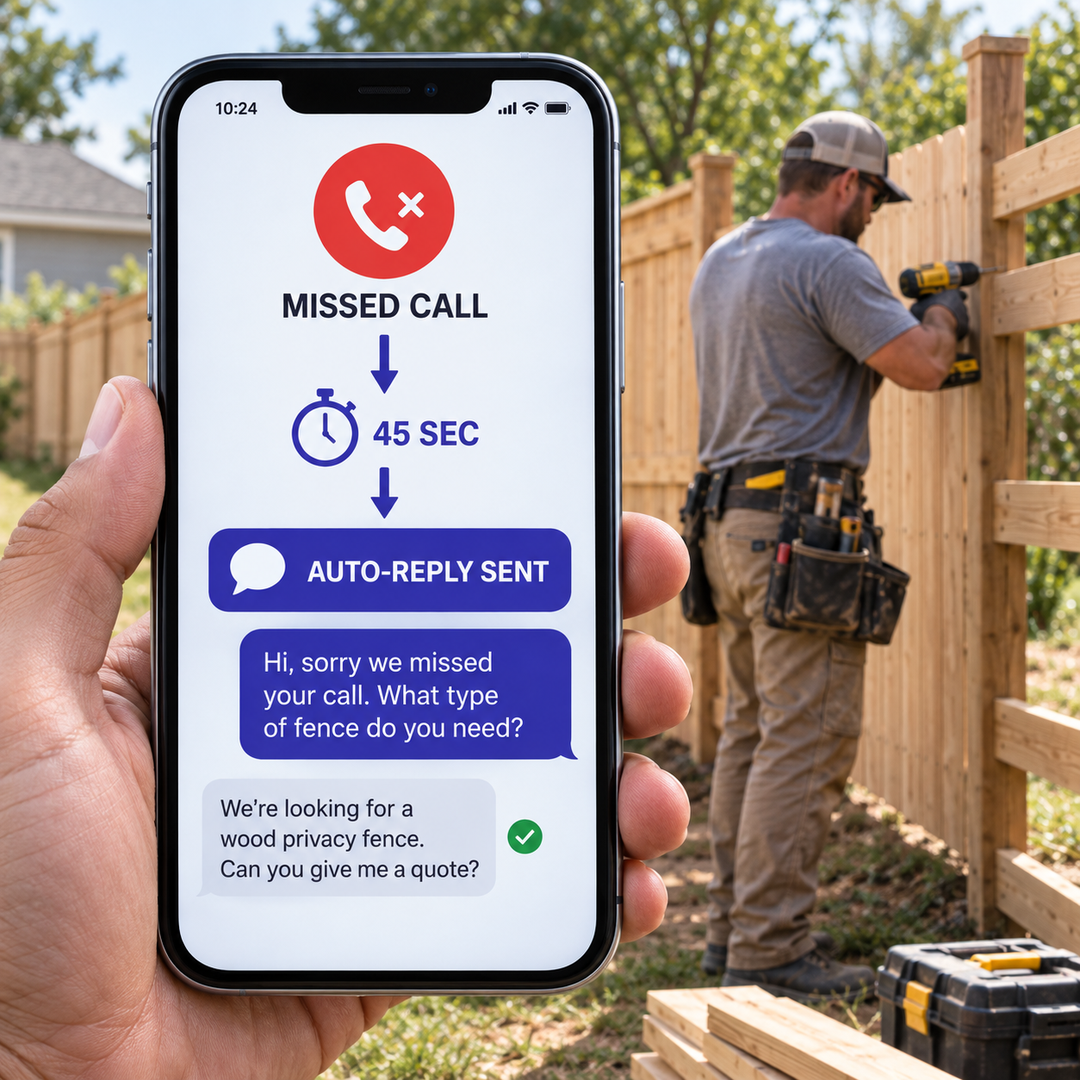
Missed-call text-back is an automation that sends a caller a text the moment you can't pick up, so a fence buyer who was about to dial the next contractor stays in your conversation instead. It's the cheapest, fastest fix in your whole lead-response process. It also recovers the contact, not the job: a real callback, a follow-up cadence, and a lead record have to sit behind it. Here's what the text should say for a fence buyer, the TCPA and 10DLC basics, what the tools cost, and how to set the whole thing up.
A missed call is one moment in a longer sales process. For how it connects to speed to lead, the estimate, follow-up and the review loop, see our fence lead-response system. This guide is the Stage 1 tactical piece: don't lose the call in the first place.
Key Takeaways
- Missed-call text-back sends an automatic text within a minute of an unanswered call, so a fence buyer who was about to dial the next contractor stays in your conversation instead.
- It recovers the contact, not the job. Without a fast human callback, a follow-up cadence, and the lead logged in a CRM, you've automated a slower way to lose it.
- A good fence auto-text has four parts — company name, acknowledgment, one next step, a timeline — and asks for fence type, rough footage, and the address so you can quote faster. Keep it under 160 characters and non-promotional.
- A single transactional reply to someone who just called you is low compliance risk. Keep marketing out of it, include Reply STOP, and make sure your tool is registered for 10DLC.
- Standalone tools run about $20 to $150 a month; the same feature bundled into a Podium- or GoHighLevel-style suite runs $300 to $500. Don't buy the suite to use one feature unless you want the rest of it.
What missed-call text-back actually does
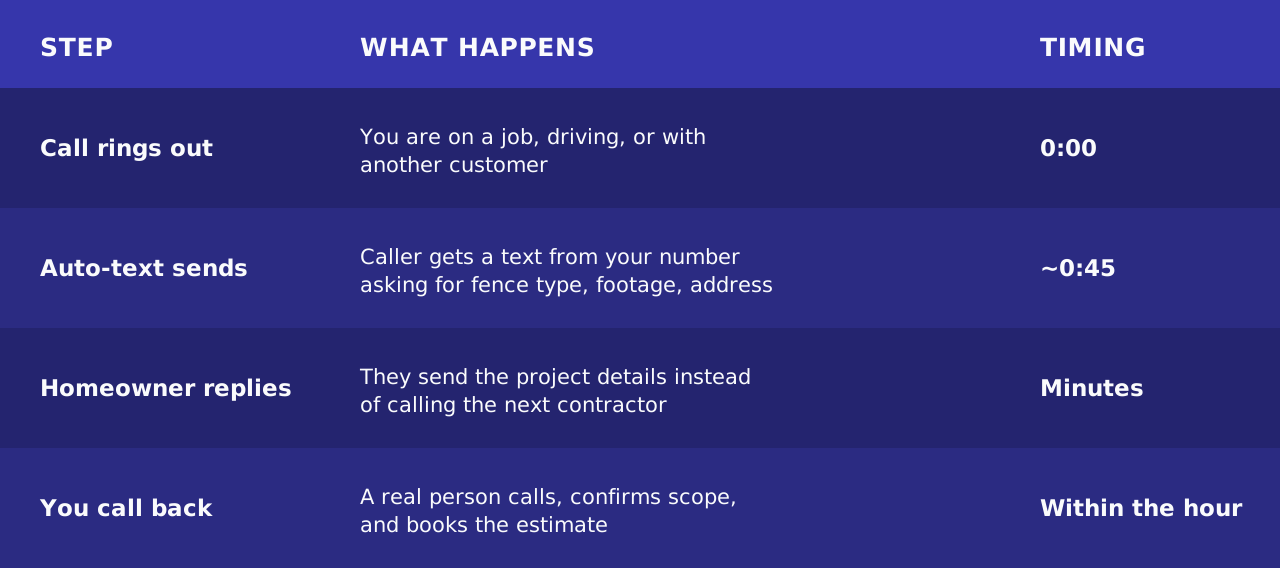
Missed-call text-back is a rule that watches your business line and, when a call goes unanswered or comes in after hours, sends that caller a text from your number within about 30 to 120 seconds. No one types it. The caller gets a short message while your company is still fresh in their mind, and the thread stays open for a human to take over.
It is not an AI receptionist that talks to callers, it is not website chat, and it is not a substitute for calling back. It buys time. Automation like this is normal in the trade now: in Jobber's December 2025 survey of 1,050 US home-service owners, 52% said they already use AI in day-to-day operations and 54% use it for quoting. That study is vendor-commissioned and covers home services broadly, not fencing, but the direction is clear enough.
Why fence companies lose the job on a missed call
A fence buyer usually calls three or four contractors in one sitting, and the calls land at the worst possible time for you: mid-install, up a ladder, or driving between sites with the phone in a cupholder. Those are your highest-intent hours and the ones you can't answer. Most callers getting quotes won't leave a voicemail. They just dial the next contractor.
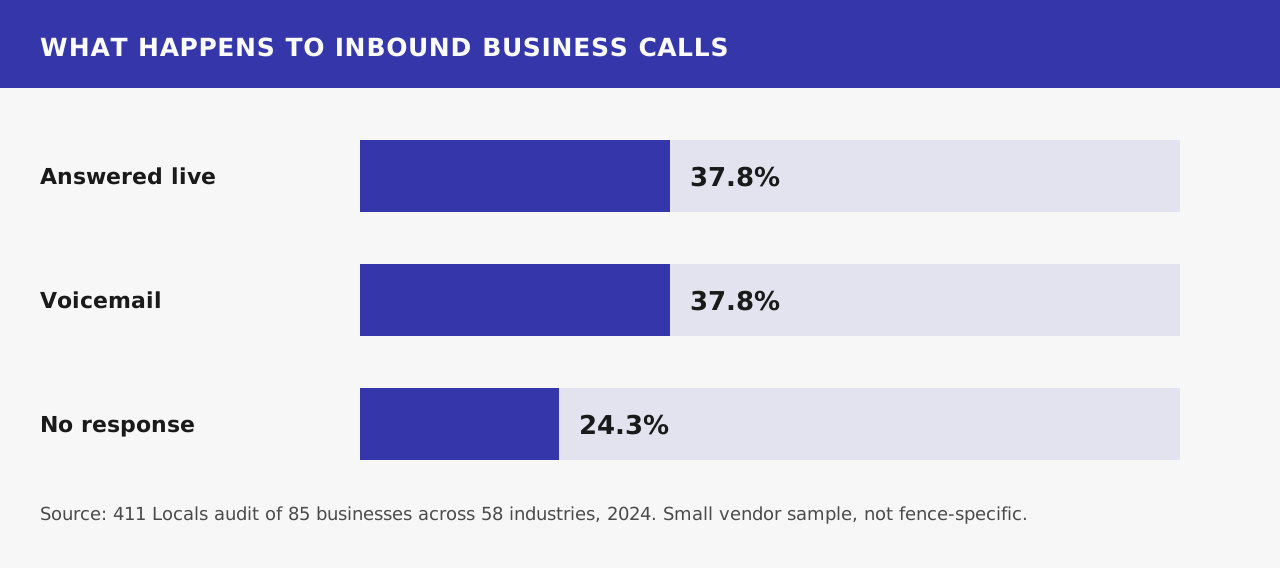
The scale of the problem is real even if the exact number isn't fence-specific. A 2024 audit by 411 Locals of 85 businesses across 58 industries found only about 38% of inbound calls were answered by a live person, roughly 38% went to voicemail, and about 24% got no response at all. It's a small, SEO-vendor sample, so treat it as a rough size, not a fence benchmark. The speed research points the same way: the MIT and InsideSales Lead Response Management study found a company was about 21 times more likely to qualify a lead when it responded at 5 minutes instead of 30, and the 2011 Harvard Business Review audit of 2,241 companies found a median first response of 42 hours with 23% never responding. Both studied web leads and measured reaching or qualifying a lead, not signing a job, and neither looked at fencing. In Jobber's 2026 survey of 800 recent US homebuyers, 15% said they had to chase a contractor for a reply and 9% never got one.
Being the contractor who keeps the thread alive is often what wins the fence job, before either side has talked price.
Run your own recovered-lead math
Skip the "recover 20 to 40%" claims the tool vendors use. There's no primary study behind them. Run your own numbers instead: your missed calls per week, times a recovery rate you measure over 30 days, times what an average job is worth to you, minus the tool cost. Residential fence jobs commonly run well into four figures, so even a handful of recovered calls a month clears a $50 to $150 tool. Our guide to how to estimate a fence job covers where that average job value comes from. Whatever you get is an estimate, not a promise.
What the auto-text should say for a fence buyer
A good missed-call text has four parts: your company name, a quick acknowledgment that you missed them, one clear next step, and a timeline for the callback. Keep it under 160 characters so it lands as one message, and keep it plain. Nothing that reads like an ad.
For fencing, use that next step to ask for what you need to quote: the fence type (wood, vinyl, chain-link, aluminum), rough linear footage, and the property address so you can pull the lot up on satellite before you call. Set an honest callback window and hold it. FTC advertising guidance says claims have to be truthful and backed up, so if the text says "within the hour," make it within the hour.
The version I set up for fence clients is form-led. Instead of trying to run the whole conversation over SMS, the text points the caller at the quote form so you capture a complete enquiry, not a half one, and it lands in the CRM as a real lead the moment they submit.
Form-led script: Sorry we missed your call. Reply here with your fence project, or use our quote form: [link]. We'll text you back and call within the hour. Reply STOP to opt out.
Three starting points
- Business hours: Hi, this is [Company] — sorry we missed you. Reply with your fence type, rough footage, and address and we'll text a ballpark and call within the hour.
- After hours: Hi, this is [Company]. We're out on jobs until [time] tomorrow. Send your fence type, footage, and address and you're first on the list for a call in the morning.
- Storm or repair: Hi, this is [Company]. For a down or damaged fence, text a photo and your address and we'll prioritise it. We'll confirm by text shortly.
Include "Reply STOP to opt out" once. The full set, with existing-customer and HOA or commercial variants, is in the template pack below.
Download NowIs missed-call text-back legal? TCPA and 10DLC for fence contractors
A single automatic text that replies to someone who just called you is a transactional message, and it carries low risk. Consent is generally presumed because the caller gave you the number for exactly this purpose. The risk starts when you drop that caller into an ongoing marketing text sequence without their written consent. Keep the auto-text informational and you stay on the safe side of that line.
Include an opt-out and honor it. The FCC's 2024 consent-revocation order confirms a customer can pull consent by any reasonable method and you have to stop promptly. A one-time confirmation text with no marketing in it is allowed. Suppress the number the moment someone replies STOP.
Then there's registration. Since early 2025, US carriers block application-to-person texts — anything sent by software rather than typed on a phone — unless the sender is registered. You or your tool must register a brand and a campaign with The Campaign Registry. Reputable platforms handle this for you; unregistered traffic gets filtered as spam. Treat all of this as an operating guardrail, not legal advice, and have a lawyer review anything automated before you add marketing on top.
How to set up missed-call text-back
You have three routes, and the right one depends on whether you already run a CRM. Route one: turn the feature on inside a phone or CRM tool you already pay for, such as GoHighLevel, Podium, Birdeye, Housecall Pro, or a Jobber add-on. Route two: buy a standalone text-back app and connect it to your number by call forwarding. Cheapest and fastest, and fine if you have no CRM. Route three: have an agency wire text-back, the follow-up cadence, and CRM tagging together as one system.
Whichever route you pick, the setup is the same short checklist:
- Confirm the number. Point call forwarding from your main line to the tool, or port the number in.
- Register 10DLC. Complete brand and campaign registration, or confirm your provider has.
- Write the templates. A business-hours message and an after-hours message, both under 160 characters.
- Set the trigger. Fire after the call rings unanswered for a set number of rings, and on every call outside business hours.
- Route the replies. Send responses to a real person or a shared inbox someone actually watches.
- Test it. Call your own line, let it ring out, and read what the caller receives.
- Log recovered leads for 30 days. That's your real recovery rate, not a vendor's.
Decide who owns the callback before you launch. The failure I see most often is the text goes out and nobody calls until the next day. The automation kept the contact; the delay lost it anyway.
Do you need a separate phone number?
Usually no. Forwarding from your main line is standard, and the text still shows your normal number. A dedicated tracked number is optional. Its main value is measurement: every recovered call and text sits under one line you can report on.
What missed-call text-back costs and how to compare tools
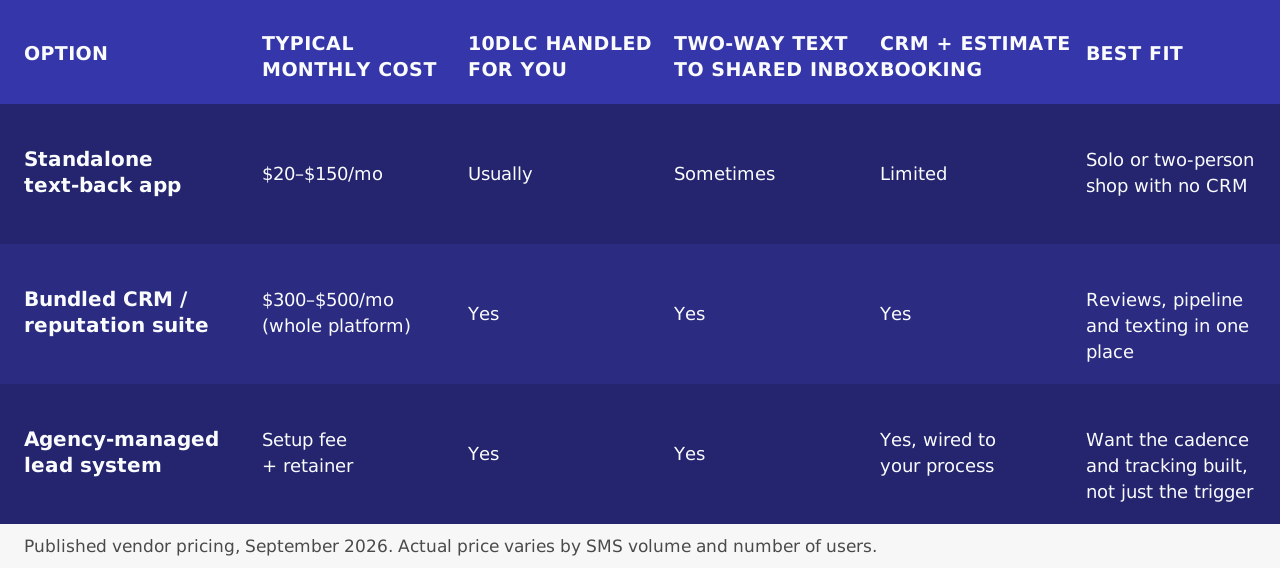
Standalone missed-call text-back runs roughly $20 to $150 a month. Bundled into a reputation or CRM suite such as Podium, Birdeye, or GoHighLevel, expect $300 to $500 a month for the whole platform, not just this feature. Agency-managed setups add a one-time fee plus a retainer. Those are published vendor prices as of September 2026; check the current pricing page before you buy.
What moves the price is SMS volume, the number of users or locations, and whether two-way AI replies are included. When you compare tools for a fence company, look at trigger flexibility (after-hours plus ring count), two-way texting into a shared inbox, CRM and calendar integration so you can book the estimate, whether 10DLC is handled for you, recovered-lead reporting, and contract length.
Fence-niche vendors and answering services also sell into this space. An answering service puts a human on the call, an AI receptionist holds a conversation, and text-back just keeps the thread warm — pick the one that matches the calls you actually miss. Don't pay $400 a month for a full suite to use one feature, unless you want the rest of the suite.
When missed-call text-back isn't enough
Text-back recovers the contact, not the job. Without a fast human callback, a follow-up cadence, and the lead sitting in a CRM, you've automated a politer way to lose it. It's Stage 1 of the lead-response system, not the system, and the companies selling it rarely say so.
The chain that actually converts looks like this: missed call, automatic text, the caller replies or fills out the form, a lead record is created, you get notified, a confirmation text goes back to the caller, and then a person calls promptly. Drop any link and the rest leaks.
Some calls still need a live voice: commercial and HOA bids, urgent repairs, and existing customers. An answering service or AI receptionist covers those better than a text. And don't let the auto-text become the reason nobody reaches for the phone. Once the caller replies, keep following up when the estimate goes quiet, and be ready to handle the price and timing objections that come next. If you want the whole chain built to fit how your shop runs, book a growth call and we'll map it out.
Put missed-call text-back to work
Turn on an auto-text that fires within a minute of a missed call, write it for a fence buyer, keep it transactional, and register for 10DLC. Then put a real callback, a cadence, and a CRM record behind it. Done that way, a missed call stops being a lost bid and becomes the cheapest lead you own.
This is Stage 1 of the fence lead-response system, which maps every step from a new inquiry to a signed job. You'll find the rest of the sales-side playbook in the Pax Pro fence contractor blog, including speed to lead for fence contractors and fence estimate follow-up.
Download NowWant to Know More?
Book A Call
Frequently Asked Questions
-
It works when a person backs it up. The text keeps a caller who was comparing several contractors from moving straight to the next one, which buys you time to call back and book the estimate. On its own it does nothing. If the auto-text goes out and no one follows up, you've sent a polite goodbye. Treat it as the first step of a lead-response system, not a fix by itself, and track your own recovered calls for a month rather than trusting a vendor recovery rate.
-
A standalone text-back app is roughly $20 to $150 a month depending on text volume and whether it does two-way replies. Bundled into a reputation or CRM platform like Podium, Birdeye, or GoHighLevel, you're paying $300 to $500 a month for the whole suite, not just this feature. An agency that sets it up as part of a lead-response system usually charges a setup fee plus a monthly retainer. Prices change, so check the current pricing page before you commit.
-
A single automatic text replying to someone who just called you is a transactional message, and consent is generally presumed because they gave you the number for that purpose. The risk starts if you drop that caller into an ongoing marketing text sequence without their written consent. Keep the auto-text informational, include "Reply STOP to opt out," and honor opt-outs quickly. Make sure your provider is registered for 10DLC, because US carriers block unregistered business texts. This is an operating guardrail, not legal advice.
-
Usually not. Most tools work by forwarding your existing business line, so the text appears to come from your normal number. A separate tracked number is optional. It's mainly useful if you want clean data on how many leads the system recovers, since those calls and texts show up under one line you can measure.
-
Four things: your company name, a quick acknowledgment that you missed them, one clear next step, and when you'll follow up, kept under 160 characters. For fencing, add a request for the fence type, rough footage, and the property address so you can pull the lot up before you call back. Skip anything that sounds like an ad. After hours, say so and give a specific next-morning callback time instead of a vague "soon."