 Phone: (021) 073-9955
 Location: New Zealand



Why the First Fence Contractor to Respond Wins the Job
Speed to lead is how fast your business responds after someone reaches out, and in fencing it can matter more than your price, your reviews, or your portfolio combined. A homeowner shopping for a fence rarely contacts just one company. She fills out three or four quote forms in the same Saturday-morning sitting, then goes back to her coffee. The contractor who calls her back first gets the first real shot at the job, often before the other three have opened their inbox. When Harvard Business Review researchers submitted real web leads to 2,241 companies and timed the response, 23% never replied at all. That study, and the MIT research below, measured whether companies reached and qualified a lead, not whether they signed the job, but the direction is hard to ignore.
Speed to lead is the first stage of a longer path. For how the fast first response hands off to follow-up, quoting and the review loop, see our fence lead-response system.
Book A CallKey Takeaways
- Speed to lead is the gap between a prospect's first contact and your first real response, measured in minutes. In fencing it often decides the job, because homeowners collect quotes in batches. In Modernize's 2024 survey of nearly 3,000 homeowners, about 42% compared two quotes and about 28% compared three.
- In the 2011 Harvard Business Review audit of 2,241 U.S. companies, only 37% responded within an hour and 23% never responded. Companies that made contact inside the first hour were close to seven times more likely to have a qualifying conversation.
- The MIT Sloan and InsideSales.com Lead Response Management study (more than 15,000 leads, over 100,000 call attempts) found that calling at the 5-minute mark instead of 30 minutes made a company roughly 100 times more likely to reach the lead and about 21 times more likely to qualify it.
- A target you can actually hit: call back within 5 minutes during business hours, text within 60 seconds if you can't pick up, follow up again the same day, and treat every missed call as a lost bid until you prove otherwise.
- Both studies used B2B software leads, not fence quotes, and no fence-specific study proves the first responder always wins. Use them as direction, not a guarantee.
What "Speed to Lead" Actually Means for a Fence Company
Speed to lead is the time between a prospect's first contact (a form submission, a missed call, a text to your Google Business Profile) and your first real response. It's measured in minutes, not hours. For a fence company, where homeowners are usually comparing several quotes in one sitting, it's often the single biggest factor in who gets the job, before either side has talked price.
How Homeowners Actually Shop for a Fence
Nobody researches a fence for three weeks the way they research a kitchen remodel. Something triggers it: a new dog, storm damage, a new build, an HOA letter. Within a day or two they are on Google requesting quotes from whoever shows up. Comparing several bids is normal behavior, not a warning sign. The Federal Trade Commission tells homeowners to get multiple estimates before hiring, and Modernize's 2024 homeowner survey found about 42% compared two quotes and about 28% compared three. Across the fence contractors we work with we see the same pattern, usually three to five quote requests in one sitting. That is a single-agency observation, not an industry benchmark, but it lines up with the survey data. The homeowner isn't loyal to anyone yet. She's loyal to whoever answers first.
What Harvard and MIT Found About Lead Response Time
Nobody built these numbers for fence contractors. They come out of B2B sales research, and they've been quoted so many times in generic marketing blogs that the actual studies behind them get lost. Here's what they actually found.
The Harvard Business Review Study (2011)
Researchers James Oldroyd, Kristina McElheran, and David Elkington audited 2,241 U.S. companies by submitting real web leads and timing whether anyone called back. Only 37% responded within an hour. Nearly a quarter, 23%, never responded at all, and the average first response took 42 hours. Companies that made contact within that first hour were close to seven times more likely to have a qualifying conversation than those that waited a day longer. The study measured those conversations, not signed contracts, so treat it as a measure of who gets in the door first.
The MIT / InsideSales.com Study
Dr. James Oldroyd, working out of MIT Sloan with InsideSales.com, ran the Lead Response Management study: roughly three years of data from six companies, more than 15,000 leads, and over 100,000 call attempts. The finding that gets cited most: contacting a lead at the 5-minute mark instead of the 30-minute mark made a company roughly 100 times more likely to reach that person and about 21 times more likely to qualify them. Thirty minutes doesn't sound slow. It is.
Why These Numbers Translate Directly to Fencing
These were software leads, not fence quotes. The mechanism still carries: whoever gets there first controls the conversation. One Pax Pro client used to get around six inbound messages a day and reply to maybe one, with the rest left sitting in a missed-calls list, some for good. We set him up so every new lead gets a response within 60 seconds, and he went from answering about one message in six to answering all of them, gradually booking each one for an on-site estimate. Same lead volume. Same guy. The only thing that changed was how fast someone answered. That is one client's result, not a benchmark, but it is the same pattern the studies describe.
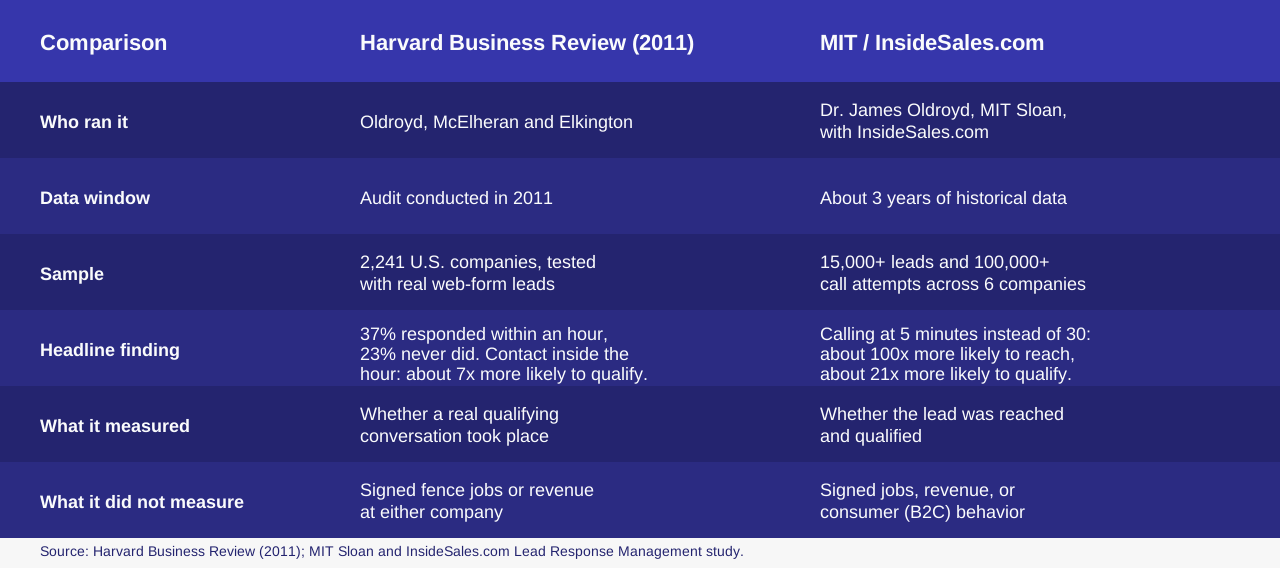
The two studies agree on direction and differ on scope. The Harvard Business Review audit measured whether 2,241 companies responded at all, and whether that response led to a qualifying conversation: 37% replied within an hour, 23% never replied, and replying inside the hour made a qualifying conversation about seven times more likely. The MIT Sloan and InsideSales.com study measured how the odds of reaching and qualifying a lead drop as response time slips from 5 minutes to 30: roughly 100 times harder to reach, about 21 times harder to qualify. Neither study measured signed jobs or revenue. The table below sets them side by side.
Why Speed Matters More in Fencing Than in Most Home-Improvement Categories
A kitchen remodel is a six-figure decision most homeowners sit with for months, gathering bids over several weeks before committing. A fence isn't that. It's functional, it's bounded, and once someone decides they need one, they want it handled. That compresses the whole shopping window into days instead of months, so the advantage of being first doesn't get diluted by a long consideration phase. You either catch the homeowner while she's still actively comparing, or you don't.
A Response-Time Framework Fence Contractors Can Actually Hit
You don't need a call center. You need targets you'll actually hit on a busy Tuesday, not just when things are slow:
- Call back within 5 minutes during business hours, every time, not just when you're between jobs.
- If you can't answer, text back within 60 seconds. Even one line holds the lead's attention until you can call.
- No answer on the callback? Follow up again the same day. Don't let it roll to tomorrow.
- Treat every missed call as a lost bid until you've proven otherwise.
This is close to what Pax Pro builds for fence contractor clients. An automated text goes out within 60 seconds of a missed call or a form submission, pulled from the website quote form or the number on their Google Business Profile. A follow-up question lands three minutes later to keep the conversation moving like a person, not a script. The owner jumps in personally once he's off the tools. Every client asks for the same thing when we set this up: make it sound like me. Short, conversational, one or two lines. Nothing salesy.
Homeowners notice. A near-instant reply tells them their message actually mattered. The guarded ones who'd normally give you three words and hang up start volunteering details about the job without being asked.
There's a version of this objection we hear constantly, and it's worth answering directly: won't calling back that fast seem too eager? No. There's no such thing as too eager in the fence business. If a lead came in, she's already picked your company as one worth contacting. You're not chasing her. You're confirming she made a good call.
Even the leads who don't book right away aren't wasted. Move them into a nurture sequence instead of letting them go cold, and you've built a relationship that can come back around as a referral, a repeat project, or a call in eighteen months when the neighbor's fence goes up too.
What Happens When You Can't Get to the Phone
Most of this falls apart in the exact moments it matters most: mid-install, up a ladder, driving between two job sites with your phone in a cupholder. That's real, and it's exactly why so many contractors answer one message in six instead of six in six. Missed-call text-back systems exist for this reason, and they get their own setup guide. The gap is closeable without you living on your phone.
The Payoff: What Faster Response Actually Wins
The Harvard Business Review data points to close to seven times better odds of a qualifying conversation when you make contact inside the first hour. The client above went from answering about one message in six to answering all of them, having changed nothing except response speed. The pattern holds because the mechanism is simple: a fence lead compares two or three contractors over a matter of days, not weeks, and the first one to show up gets the conversation the other two never get a shot at. Your pricing, your crew, your reviews: none of it gets weighed until you're in that conversation. Speed to lead is what gets you there. For where it fits in the bigger picture, see our guide to marketing a fence business.
The framework above comes from building this response setup across real fence-company inboxes and watching what changed, not from theory.
Book A CallFrequently Asked Questions
-
Speed to lead is the time between a prospect's first contact (a call, text, or form submission) and your first real response. For fence companies, it's usually the deciding factor in who gets the job, since homeowners typically request several quotes in one sitting.
-
Aim for a callback within 5 minutes during business hours, or a text within 60 seconds if you can't pick up. If there's no answer, follow up again the same day rather than waiting until tomorrow.
-
Researchers Oldroyd, McElheran, and Elkington audited 2,241 companies in 2011 and found only 37% responded to a new lead within an hour, while 23% never responded at all. Companies that responded within the first hour were nearly seven times more likely to have a real conversation with the lead.
-
Because they're usually comparing several quotes at once, and the first response feels like proof their request actually mattered. A fast reply also gives you the first real conversation, before the homeowner has talked pricing or timeline with anyone else.
-
Call back within minutes, not hours. If you genuinely can't get to the phone, a short text holds the lead's attention until you can. The goal is making sure they hear from you before they hear back from someone else.
