 Phone: (021) 073-9955
 Location: New Zealand



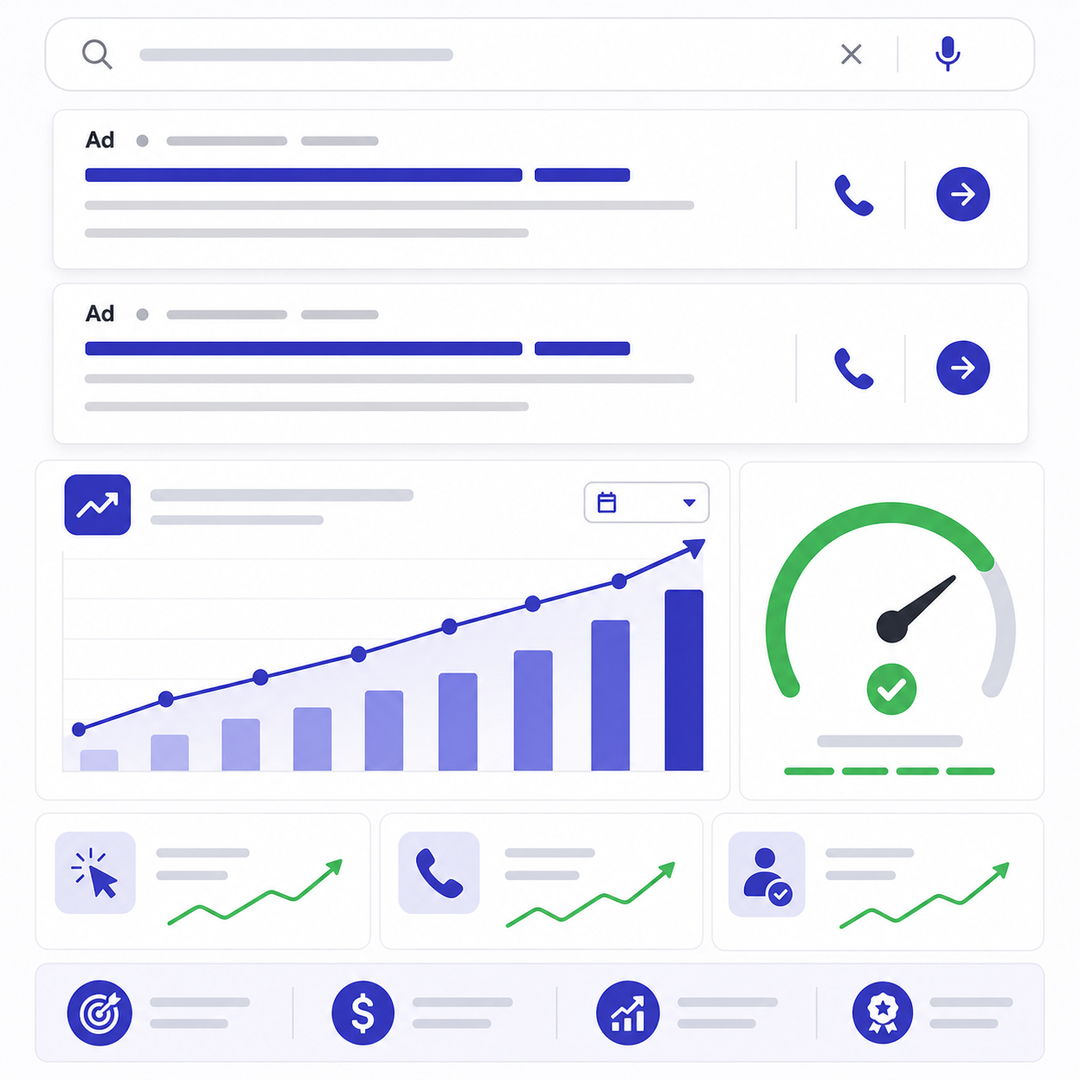
Google Ads for Fence Companies That Want Booked Jobs, Not Just Clicks
Most fence companies find out the hard way that turning on Google Ads is the easy part. The account gets built, the budget gets spent, and three weeks later the owner is asking why the phone barely rang. Pax Pro runs Google Ads for fence companies as one piece of a system: the campaign, the landing page, and the follow-up that actually answers a lead before a competitor does.
Book A CallWhat Is Google Ads for Fence Companies?
Google Ads for fence companies is pay-per-click advertising built around fencing-specific search terms, things like "privacy fence installation," "vinyl fence cost," and "chain link fence contractor near me," so your business shows up at the exact moment someone's ready to hire. Not months from now, once an SEO campaign finally starts ranking.
Why Fence Companies Need PPC Beyond SEO
Fence installs cluster hard around one stretch of the year. Most of the country sees the bulk of its work happen between March and August, which means the pipeline for that season has to be built well before the weather cooperates. SEO can get you there eventually. Six to twelve months of consistent work, usually. But it doesn't move fast enough to fill a spring calendar if you're starting the campaign in February.
PPC turns on the day you launch it. That's the whole appeal, and it's also why so many fence companies lean on it as their primary channel instead of a supplement. The ads show up on page one immediately, next to whoever's been grinding away at organic rankings for years, and sometimes above them.
The Ways Fence Companies Waste Money on Google Ads Before They Ever Call an Agency
The most common mistake is the simplest one to picture. An owner builds the campaign themselves, points it at a website they also built themselves, and routes every quote request through a contact form that dumps into an inbox nobody checks until lunch. By the time somebody replies, the homeowner has already gotten a callback from two other contractors and picked one.
A second one catches people off guard, and it's a little strange when you first hear it. Instead of quote requests, the ads start pulling in job applications. People who saw "fence company" in a search ad and assumed it was a hiring post. That traffic still costs money. It just never had any intention of buying a fence, and there's no obvious way to know it's happening unless someone's actually reading the messages coming in.
The third is a targeting problem, and it's the one that kills confidence in PPC entirely. No buyer-intent keywords, no negative keyword list, so the campaign shows up for "fence repair," "how to build a fence yourself," even "fence pictures." Spend climbs. Leads don't. The owner decides the whole thing is a scam and tells everyone at the lumber yard that Google Ads doesn't work for fence companies. It works. It just wasn't set up to find buyers in the first place.
Is Google Ads Actually Worth It for a Fence Company?
Yes, when the campaign targets buyer-intent keywords and the lead gets a response within minutes. Not when the account runs on autopilot with a slow follow-up sitting behind it. The ad spend and the response system are really the same investment. Skip one and you've wasted the other.
What Happens After the Click Decides Whether the Ad Spend Was Worth It
A text message comes in. A call gets missed. Either one fires the same sequence.
The first message goes out within 30 seconds, before the lead has closed the tab or already dialed someone else. Three minutes later, a second message follows. Not a form confirmation. An actual question, something that gets the lead typing back and sharing more about what they actually need.
Three minutes turned out to be the number that works. Faster than that and it reads like a bot answered the phone. Any slower and the moment's gone, and the homeowner's back on Google clicking the next result down.
This is the part that's genuinely missing from most fence-company PPC setups, and honestly from most agencies that sell it. They'll build you a campaign. Almost none of them build the response system that decides whether the campaign was worth running in the first place.
What a Real Fence-Specific Google Ads Campaign Actually Includes
A campaign built for the fencing trade looks different from a generic "home services" template. It should include:
- Material and service-specific keyword targeting, with wood, vinyl, chain link, aluminum, privacy, and commercial fencing treated as separate targets instead of lumped together
- Call-only campaigns for the segment of homeowners who'd rather talk than fill out a form
- Local geo-targeting with service-area exclusions, so budget doesn't burn on searches from three counties away
- A negative keyword list built to keep terms like "repair," "DIY," "pictures," "jobs," and "hiring" out of the account from day one
The keyword and negative-keyword work isn't a one-time setup, either. Search terms that looked like buyers in January can turn into wasted clicks by June once the seasonal rush changes who's actually searching. An account that isn't reviewed weekly drifts, and drift is where budget quietly leaks out.
A real fence-specific keyword list also gets more specific than most owners expect. Not just "fence installation," but the material and job-type variations that actually show buying intent: "6 foot privacy fence cost," "vinyl fence installation quote," "commercial chain link fence contractor," "aluminum pool fence installer." Each one signals a different customer, at a different budget, at a different stage of deciding who to call.
How It Works: Your First 30 Days
Step 1: Account Build and Keyword Mapping
The campaign gets structured around your actual service area and the fence types you install, with the negative keyword list built in before the first dollar spends, not added after the first bad week.
Step 2: Launch With Tracking Already Wired In
Every call gets recorded and tagged, every form fill gets tied back to the keyword that produced it. Without this, there's no way to know which searches are turning into booked jobs versus which ones just look good in a dashboard.
Step 3: The Follow-Up System Goes Live the Same Day as the Ads
No lead sits untouched while the account "gets going." The 30-second and 3-minute sequence runs from the first click.
Step 4: Weekly Review and Optimization
Search terms get audited, budget shifts toward what's converting, and anything pulling in job seekers or repair searches gets added to the exclusion list before it burns more spend.
What a Fence Company's Google Ads Account Should Actually Track
Cost per lead is the number most agencies report on, and it's the wrong one to obsess over on its own. A campaign can produce a low cost per lead full of people who wanted a repair quote or a job application, and the number still looks great on a monthly report.
The number that actually matters is cost per booked job, not cost per lead. That means tying call tracking to outcomes instead of just counting how many times the phone rang, and it means being honest when a keyword that looks cheap is quietly filling the pipeline with the wrong kind of traffic.
What Fence Companies Should Expect to Pay for Google Ads
Across the fencing industry, cost per click on buyer-intent search terms tends to run somewhere between $6 and $22, depending on the market and how many other contractors are bidding on the same terms. Most fence companies start somewhere between $2,000 and $5,000 a month, and a well-targeted account should return in the range of 3 to 6 times what's spent, once the follow-up side is actually handled.
Those numbers swing a lot by region. A fence company in a competitive metro is going to pay more per click than one in a smaller market with two other installers in town. Whether commercial fencing is part of the target mix also changes the math, since commercial jobs carry higher click costs and a longer sales cycle than a residential backyard fence. For a modeled budget breakdown and a real example of a fence company that cut its cost per lead from $19 to $8 through testing, see our full guide to Google Ads costs and campaign setup.
What To Do With the Budget in the Off-Season
October through February is when most fence companies either shut the campaign off completely or leave it running on autopilot and wonder why the cost per lead doubles. Neither is the right move.
The smarter play is to shift spend rather than cut it. Retarget the people who visited the site during the summer rush but never converted. Pull back on the broadest, most expensive keywords and lean into brand-defense terms that keep competitors from picking off searches for your own company name. Use the slow months to refresh landing pages and ad creative so the account is ready to scale the moment demand turns back on in March, instead of scrambling to rebuild a campaign in week one of the season.
Google Ads and Local SEO Work Better Together
PPC gets you visibility now. Local SEO builds the channel that eventually brings your cost per lead down, because you stop paying for every single click once you're ranking organically for the terms that matter. Fence companies running both end up with a shorter runway to profitability than ones running either alone. The ads fill the gap while the organic rankings catch up.
Why Fence Companies Choose Pax Pro for Google Ads
Most agencies selling "PPC for home services" run fence companies through the same template they use for plumbers and roofers. The keyword lists get copied, the landing pages get reskinned with a new logo, and the account manager has never had to explain the difference between a privacy fence and a picket fence to a client.
Pax Pro only works with fence contractors. That means the keyword build starts from what actually converts in this trade instead of a generic services list, and the negative keyword list already accounts for the job-application and repair-search noise that eats other contractors' budgets before anyone notices.
It also means the campaign doesn't stop at the click. The 30-second and 3-minute follow-up system runs on every lead from day one, not as an add-on sold six months in after the first round of complaints about slow response times. And because Pax Pro also builds landing pages and runs local SEO for fence contractors, the ad account, the page it points to, and the organic strategy behind it are built by the same team instead of three vendors who've never spoken to each other.
What's Included in Pax Pro's Google Ads Management for Fence Companies
- Campaign build and buyer-intent keyword targeting, tuned to your service area and the fence types you actually install
- Custom landing pages built to convert, not a generic homepage repurposed as an ad destination
- Call tracking and reporting so you know exactly which keywords are turning into booked jobs
- The 30-second and 3-minute follow-up system built into every lead from day one, not sold as an upsell later
Ads are one input into a pipeline that also includes pay-per-lead options for fence companies that don't want to manage an ad account directly at all.
Running ads without a fast follow-up behind them is like paying for a phone line nobody answers. Pax Pro builds the campaign, the landing page, and the response system together, so every dollar spent on a click has a real shot at becoming a booked job.
Book A CallWhat Our Partners Say
-
Very professional, responds quickly, listens to our concerns, and always makes sure we're making progress. Our fence company is doing great with the systems he sets up. Highly recommend.
-
Awesome web designer. Platform works very nice. Curtis gets back to you faster than I expected. Listens tentatively and adjust any concerns beautiful. Highly recommended . He does not disappoint.
-
Big thanks to Curtis from Pax Pro! He's helped me and my landscaping business by building a new website and his SEO is already getting me interested quote requests.


Frequently Asked Questions
-
Most fence companies start between $2,000 and $5,000 a month in ad spend, with cost per click on buyer-intent terms typically running $6 to $22 depending on the market. Management fees are separate from ad spend and depend on the scope of the account.
-
Campaigns can go live within days of launch, but the real ramp-up happens over the first two to four weeks as targeting tightens and the negative keyword list catches the traffic that shouldn't be there in the first place.
-
No. $2,000 to $2,500 a month is a realistic floor for most local markets. Below that, there usually isn't enough data flowing through the account to optimize it properly.
-
Google Ads is fast, and it's rented. The visibility stops the moment the budget does. Local SEO is slower to build but compounds, and eventually lowers what you're paying per lead. Most fence companies that grow steadily end up running both.
-
Usually one of three things is happening: the keyword targeting is too broad, there's no follow-up system catching leads within minutes of them coming in, or the traffic isn't actually made up of buyers, since job seekers and researchers can eat a budget just as fast as real leads can. All three are fixable without starting the account over from scratch.
